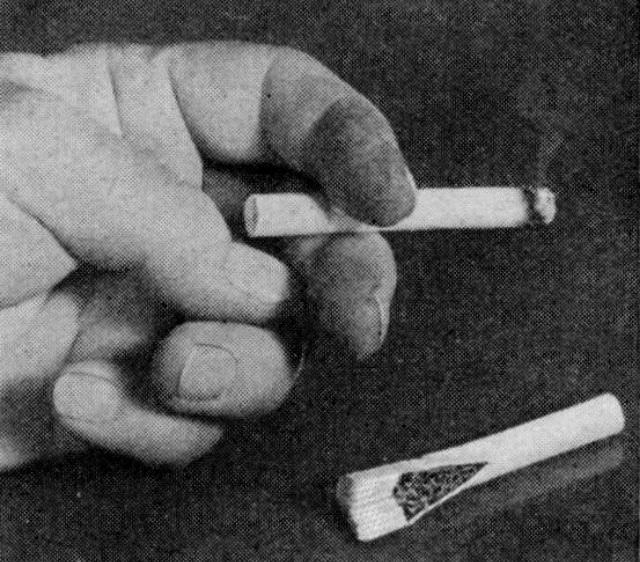
A close-up hand holds a cigarette with a noticeably different mouth-end, drawing attention to an early filter-tip design at a time when most cigarettes were still plain paper tubes. The tight framing and grainy print quality suggest the image was meant to demonstrate a new feature rather than celebrate a person, turning a routine habit into a small piece of industrial innovation. Even without branding or a clear setting, the contrast between the white paper and dark background makes the altered tip the star of the scene.
Off to the side lies what looks like a cutaway or separate filter component, revealing a textured interior that hints at the materials and engineering being tested. That simple reveal—showing what’s normally hidden—reads like early product photography or a newspaper illustration aimed at convincing skeptical smokers that “filtered” meant something tangible. In the history of consumer inventions, moments like this mark the shift from hand-rolled traditions to mass-market improvements designed to be seen, explained, and sold.
Seen today, the early appearance of a filter tip cigarette also speaks to changing public attitudes, as manufacturers began responding to concerns with design tweaks and new marketing language. For collectors and researchers, images like this help trace the evolution of cigarette technology, from experimental add-ons to standardized filter tips that later became commonplace. It’s a small, stark photograph, yet it opens a wider story about invention, persuasion, and how everyday objects quietly reinvent themselves.