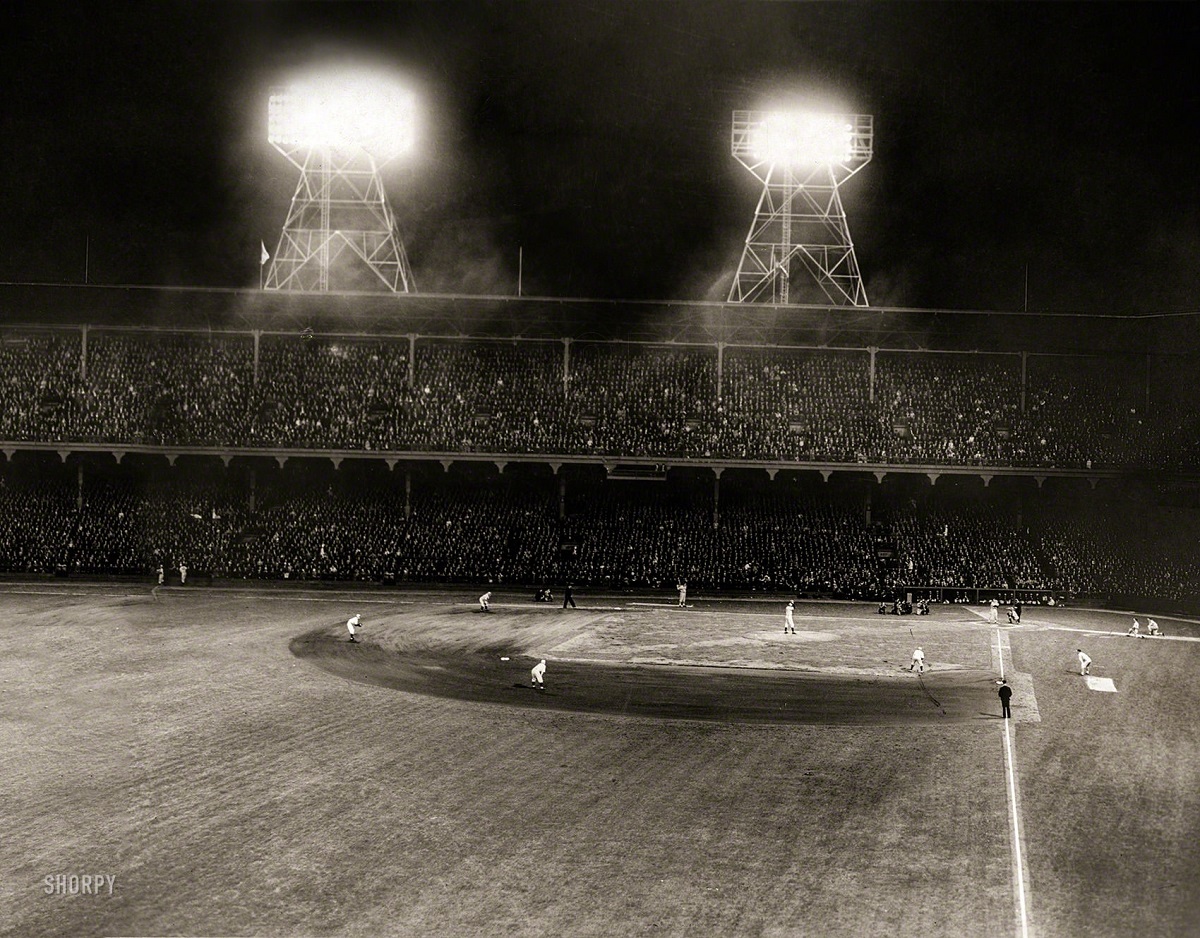
Under towering floodlights, Ebbets Field becomes a bright island in the surrounding dark, its grandstand packed so tightly it reads as a single, restless texture of faces. The 1940s setting is written in the architecture and the atmosphere: deep shadows beyond the outfield, a hazy glow around the light standards, and the unmistakable geometry of an old ballpark built for intimacy rather than sprawl. Even from a distance, the scene communicates why night baseball felt like a modern marvel—baseball reshaped by electricity and spectacle.
Across the diamond, players look almost miniature against the massive wall of spectators, spaced into their positions as the infield lines cut cleanly through the frame. The crowd’s density hints at an era when a big game could turn the stands into a kind of urban theater, where every pitch drew thousands into the same shared suspense. Overcrowded stadium nights like this weren’t just about the score; they were about being present, pressed shoulder to shoulder, part of a roaring, collective rhythm.
For anyone searching for vintage baseball photos, Brooklyn Dodgers history, or the lost atmosphere of Ebbets Field at night, this image delivers a vivid reminder of how the sport once filled its parks to the brim. It’s also a snapshot of fan culture in the past—before giant video boards and luxury suites, when the brightest lights were overhead and the loudest broadcast came from the bleachers. The photograph preserves a particular kind of American evening: workday done, stadium full, and a summer game continuing long after sunset.