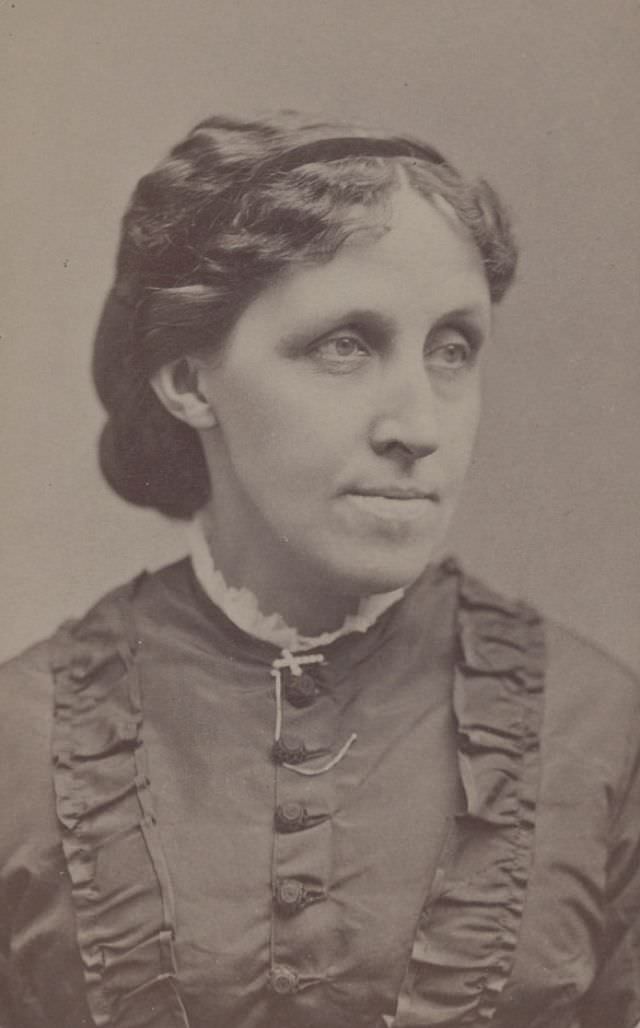
A steady, thoughtful gaze meets the viewer in this studio portrait of Louisa May Alcott, her hair neatly swept back and her dress fastened high at the throat with a simple ribbon. The soft lighting and plain backdrop draw attention to her expression rather than any distraction, suggesting a person accustomed to observation, reflection, and purposeful work. Details like the ruffled trim and row of buttons anchor the photograph in the everyday material culture of the nineteenth century.
Remembered widely as a writer, Alcott’s life also threaded through the moral and political struggles of her era, including abolitionism and the upheaval of the Civil War. Her public identity cannot be separated from the world that pressed writers into service as witnesses and advocates, whether through essays, letters, or fiction shaped by lived experience. That dual role—literary craft paired with civic conscience—gives this image added weight, as if the quiet composure hints at resolve forged beyond the camera’s frame.
For readers searching for Louisa May Alcott photos, Civil War history, or the story of women who worked and wrote through national crisis, this post offers a close, human encounter with a familiar name. The portrait invites you to consider how a single face could carry multiple callings: author, reformer, and nurse, moving between private endurance and public duty. Seen today, it becomes more than a keepsake—it’s a doorway into the lived texture of an age that demanded both imagination and courage.