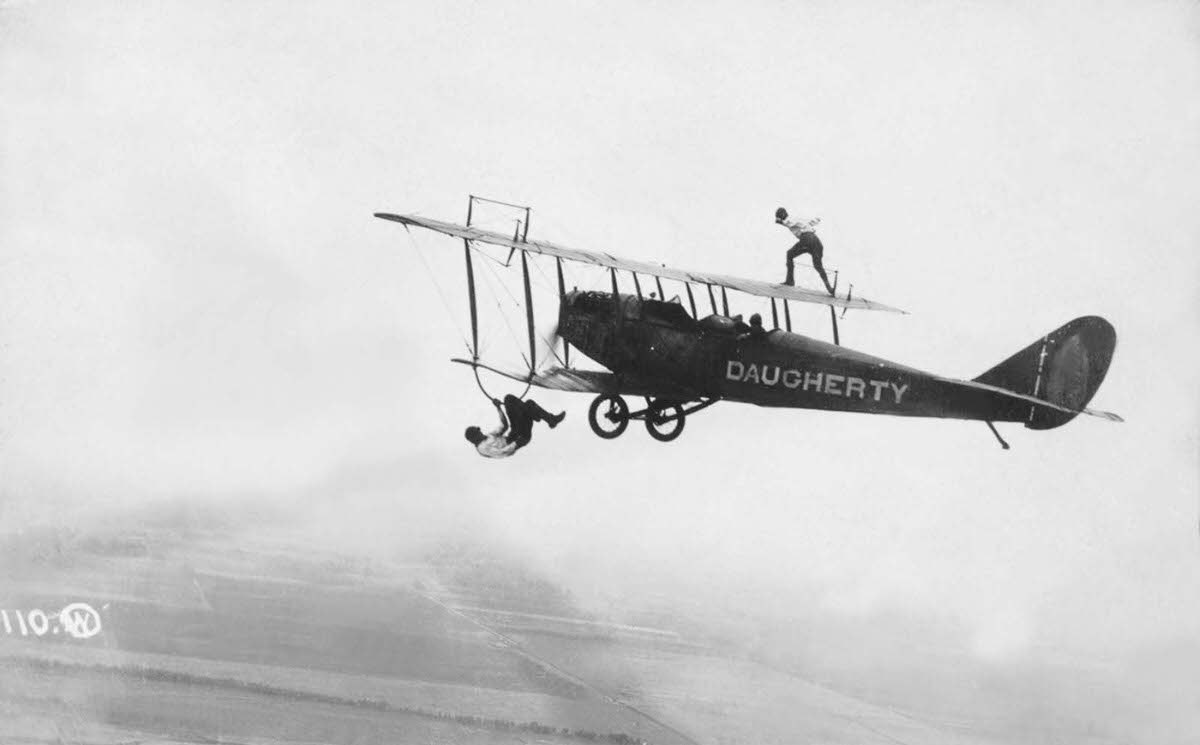
High above the patchwork ground, a biplane cuts through open sky while two wing walkers perform with startling calm—one standing upright on the top wing, the other hanging beneath the aircraft by what looks like a trapeze-like bar. The fuselage bears the bold lettering “DAUGHERTY,” a striking detail that turns the plane itself into part of the spectacle. Even without sound, the photograph suggests the roar of the engine and the rush of wind that made early aviation stunts feel like both sport and theater.
Wing walking in 1920 belonged to a daring era when flight was still new enough to seem miraculous, and air shows drew crowds eager for proof that humans could master the air. The performers’ poses read like a choreography of balance and grip, set against the rigid geometry of struts, wires, and wings. Every element underscores how exposed these acts were—no enclosed cockpit, no protective harness in sight, just fabric-covered wings and nerve.
For readers interested in aviation history, barnstorming culture, and the origins of aerial performance, this image offers a vivid glimpse into the daredevil side of early flight. It also highlights the biplane as both machine and stage, built for utility yet adapted for showmanship. The result is a memorable historical moment: wing walkers showing off above and below a biplane, capturing the thrill-seeking spirit that helped popularize aviation in the early twentieth century.