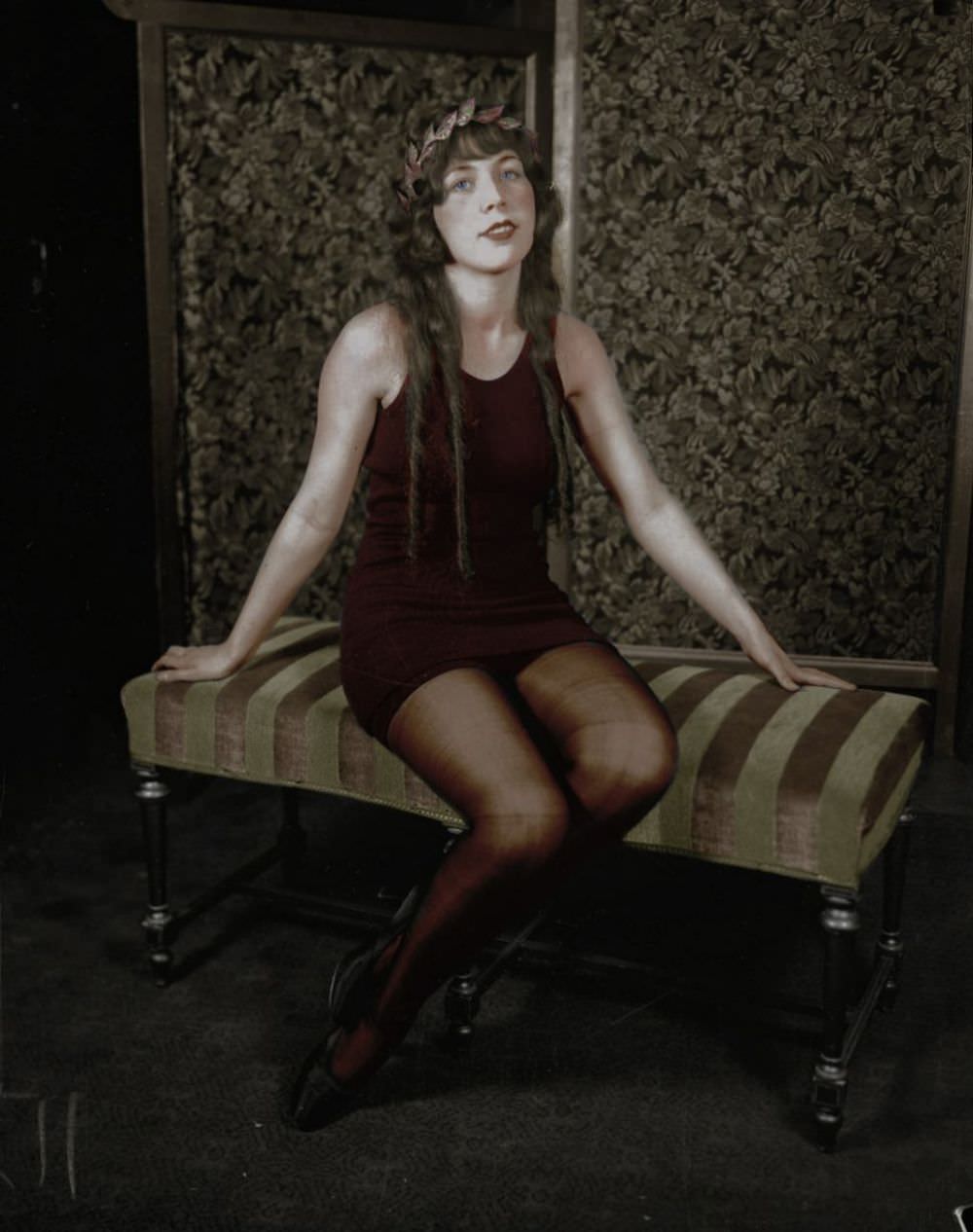
Poised on a striped bench against richly patterned wallpaper, Margarita Gonzales appears with the calm confidence that made pageant portraits such potent symbols of the 1920s. A dark, sleeveless dress and sheer stockings emphasize the era’s sleek, modern silhouette, while a leafy headpiece adds a classical note that nods to “beauty queen” ceremony. Her relaxed, open-armed pose feels both staged and intimate, inviting the viewer to linger on expression as much as fashion.
Colorization brings out the soft contrasts that are easy to miss in older prints, turning fabric textures, skin tones, and the room’s decorative backdrop into a more immediate, human scene. Details like the subtle sheen of the hosiery, the warm depth of the background, and the carefully arranged hair help anchor this portrait in the visual language of Jazz Age glamour. Even without a bustling cityscape in view, the image resonates as a Chicago story—urban, stylish, and shaped for public attention.
Titled “Miss Chicago of 1925,” this photograph sits at the crossroads of local celebrity culture and changing ideals of femininity, when modern leisurewear and studio photography worked hand in hand to craft a public persona. Pageants were as much about publicity as they were about appearance, and portraits like this circulated widely in newspapers and promotional materials, blending admiration with marketing. For readers interested in early 20th-century Chicago history, vintage portraiture, and the art of photo colorization, Margarita Gonzales’ image offers a vivid window into how the Roaring Twenties liked to see itself.