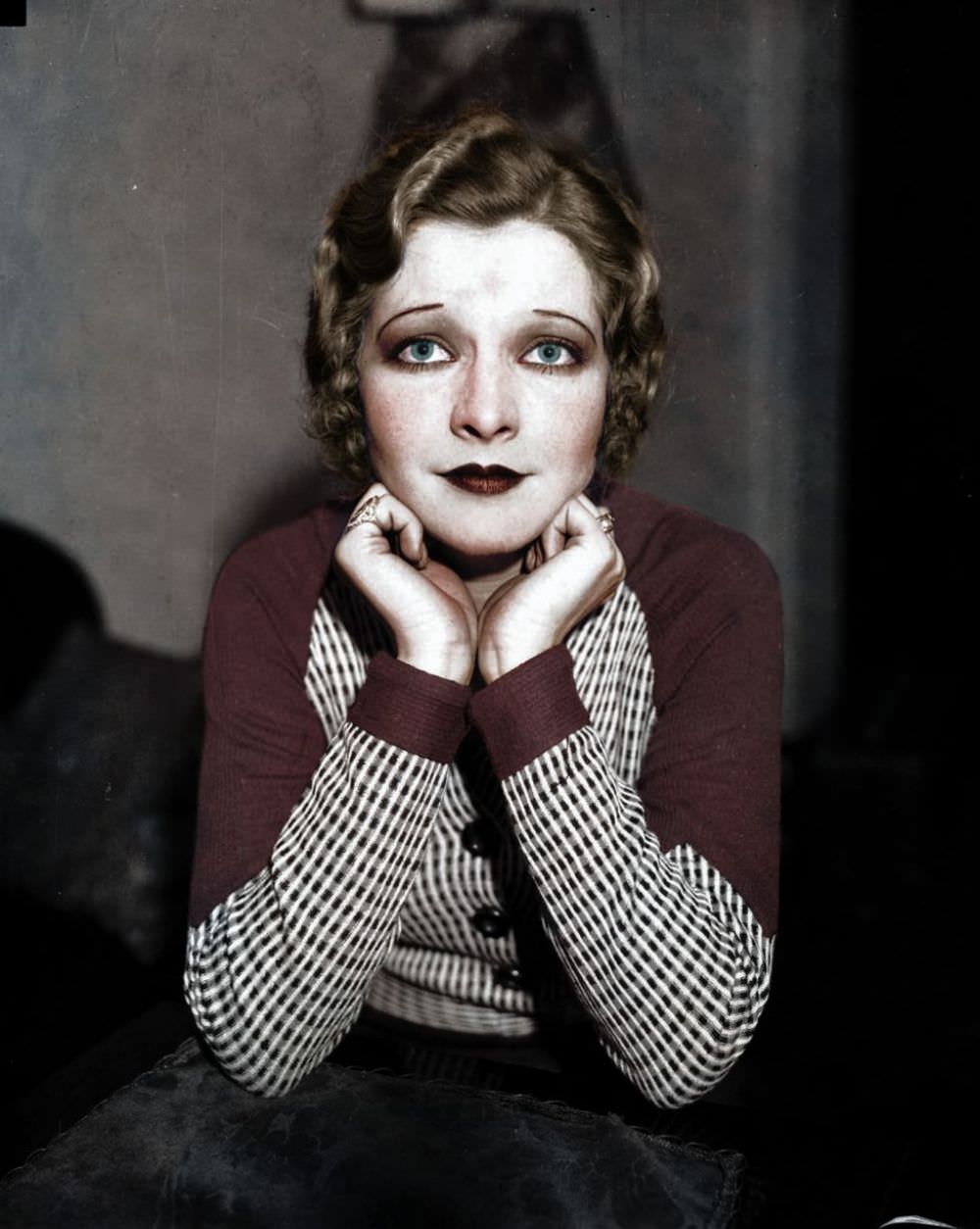
Evelyn Cushing’s face fills the frame with the poised calm of a woman used to cameras, yet still capable of looking candidly vulnerable. Her chin rests lightly on clasped hands, bringing attention to carefully styled finger waves, thinly arched brows, and the rich lipstick tones that colorization makes strikingly immediate. A patterned blouse and darker sleeves add texture and contrast, while the soft, unfussy backdrop keeps the focus on her expression.
Crowned Miss Illinois in 1932, Cushing stepped into a world where beauty pageants were becoming a major part of American popular culture. The era prized polished presentation—photogenic angles, controlled lighting, and a look that could travel from local newspapers to national publicity—exactly the kind of portrait seen here. In the midst of the Great Depression, such competitions offered spectacle and aspiration, and winners often found themselves representing more than personal glamour: they carried hometown pride and state identity onto a bigger stage.
Colorization gives this historical photo a fresh intimacy, turning a once-distant pageant title into a real person with clear eyes and a steady gaze. For readers searching Miss Illinois history, Miss America contestants, or 1930s beauty queen portraits, the image serves as a vivid window into the aesthetics and media of the time. It also invites a quieter question behind the crown—what it felt like, at 24, to be propelled from a state victory toward a national competition and all the attention that came with it.