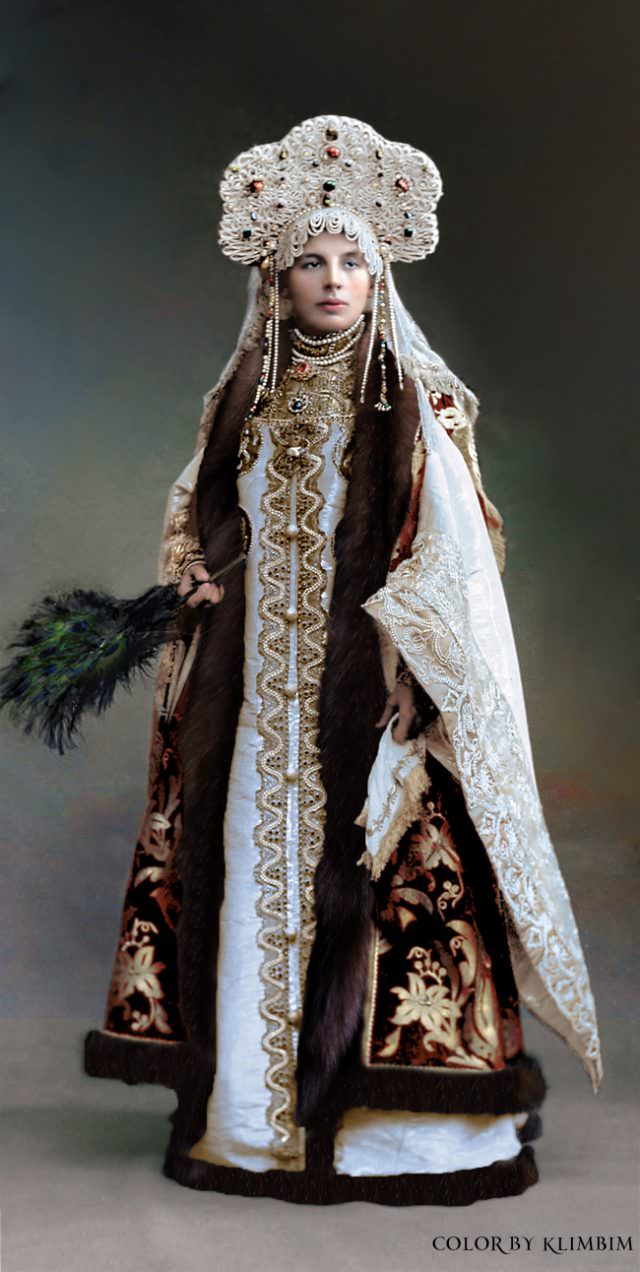
Regal and composed, Countess Fersen—born Princesse Dolgorouky—appears in ceremonial dress that evokes the world of a 17th‑century boyar’s wife. The colorization brings forward the gleam of embroidered gold, the deep richness of fur trim, and the sculptural splendor of the traditional headdress, turning what might otherwise feel distant into something vividly tangible. Her steady gaze and upright posture read like a portrait meant to communicate lineage, dignity, and the carefully staged authority of elite women in old Russia.
So much of the story sits in the textiles: layered brocade, intricate edging, and heavy ornamentation that would have signaled wealth as clearly as a title. The long, dark fur panels and patterned outer garment frame a pale central robe densely worked with decorative motifs, while strands of beads and jewels soften the severity with shimmer and movement. Even the handheld accessory—dark and feathery—adds to the sense of pageantry, suggesting a setting where display and protocol mattered as much as comfort.
For readers drawn to Russian aristocratic fashion, boyar culture, and historic costume, this portrait offers a striking visual entry point without needing exact dates or a named studio to be compelling. Colorization here is more than a stylistic choice; it helps modern eyes read materials, contrast, and craftsmanship that black-and-white often flattens, highlighting the artistry of garments designed to be seen. Whether you arrive searching for Princess Dolgorouky, Countess Fersen, or simply 17th‑century Russian dress, the image lingers as a quiet reminder of how status, tradition, and identity were woven—literally—into everyday representation.