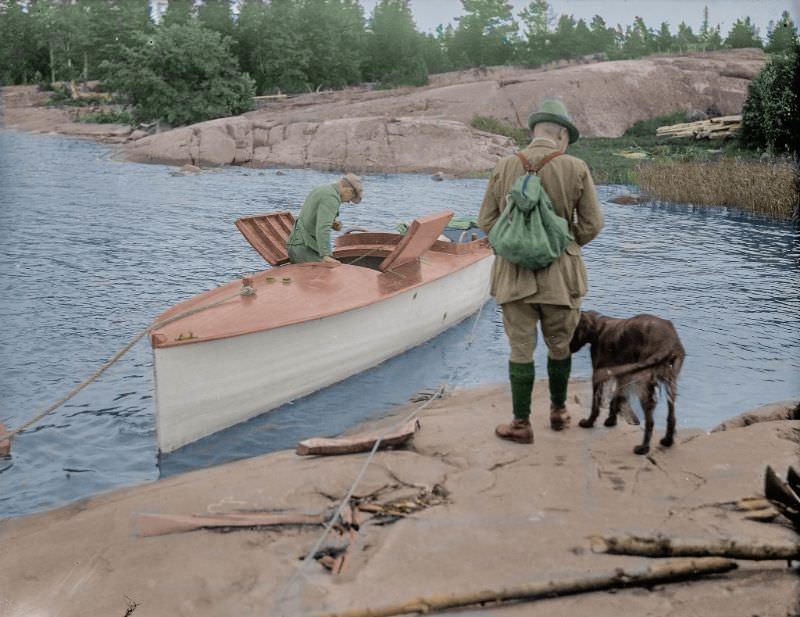
Along a calm inlet of the southern Finnish archipelago, a sleek wooden motorboat noses up to bare granite shoreline, its pale hull reflecting the cool water. The colorization brings out muted greens in clothing and vegetation, giving the scene a lived-in immediacy rather than the distant feel we often associate with the 1920s. Low pines and scrubby bushes cling to the rock behind, a familiar coastal backdrop where land and sea meet without ceremony.
One figure leans into the open cockpit, checking gear or stowing supplies beneath the hinged hatch, while another stands on the rock in sturdy boots and knee-high socks, a small pack slung across the back. A dog waits close at heel, alert and ready, as if it knows that the real work begins once the boat pushes off. Everyday details—rope lines, a plank on the shore, the boat’s polished woodwork—suggest a practical departure rather than a leisurely cruise.
Between the still water and the weathered stone, the photograph tells a quiet story of island travel in interwar Finland, when small craft connected scattered communities across channels and skerries. “Preparing for departure” fits perfectly: it’s a moment of pause, a final check, the anticipation of movement into the wider archipelago. For readers searching for Finnish maritime history, 1920s island life, or colorized historical photos, this scene offers a vivid glimpse of coastal routine and companionship at the water’s edge.