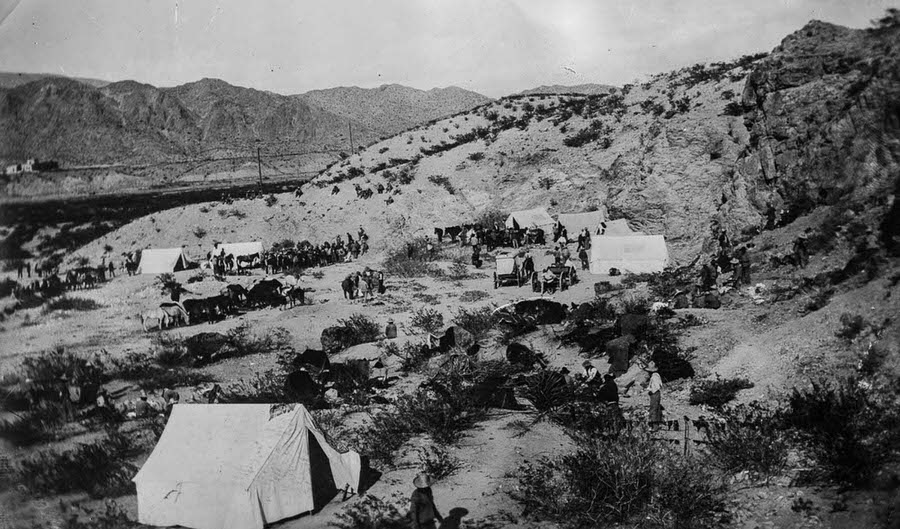
Dusty foothills and a wide, open valley set the stage for a rebel encampment outside Ciudad Juarez, where rows of pale canvas tents punctuate the scrubland. The scene stretches across a rugged slope, with small clusters of figures gathered near the shelters and along the paths worn into the ground. In the distance, the landscape opens toward a river corridor and low mountains, emphasizing how exposed—and how strategically placed—this temporary settlement was.
Along the camp’s edge, horses and pack animals stand in loose lines, hinting at the constant movement that defines civil wars: scouting rides, supply runs, and rapid shifts in position. Wagons and gear occupy the midground, while groups of men appear to confer or wait, their dark silhouettes contrasting against the bright tents. Everyday routines—feeding animals, organizing equipment, holding watch—unfold in plain sight, reminding us that most of a campaign is lived between battles.
Outside Ciudad Juarez, such camps were more than sleeping quarters; they were logistical hubs where morale, discipline, and survival were tested by heat, scarcity, and uncertainty. The photograph’s broad perspective invites a closer look at how terrain shapes conflict, from the shelter of the hillside to the visibility across the valley floor. For readers interested in Mexican borderland history and the lived reality of insurgent warfare, this image offers a grounded, unromantic view of a rebellion in motion.