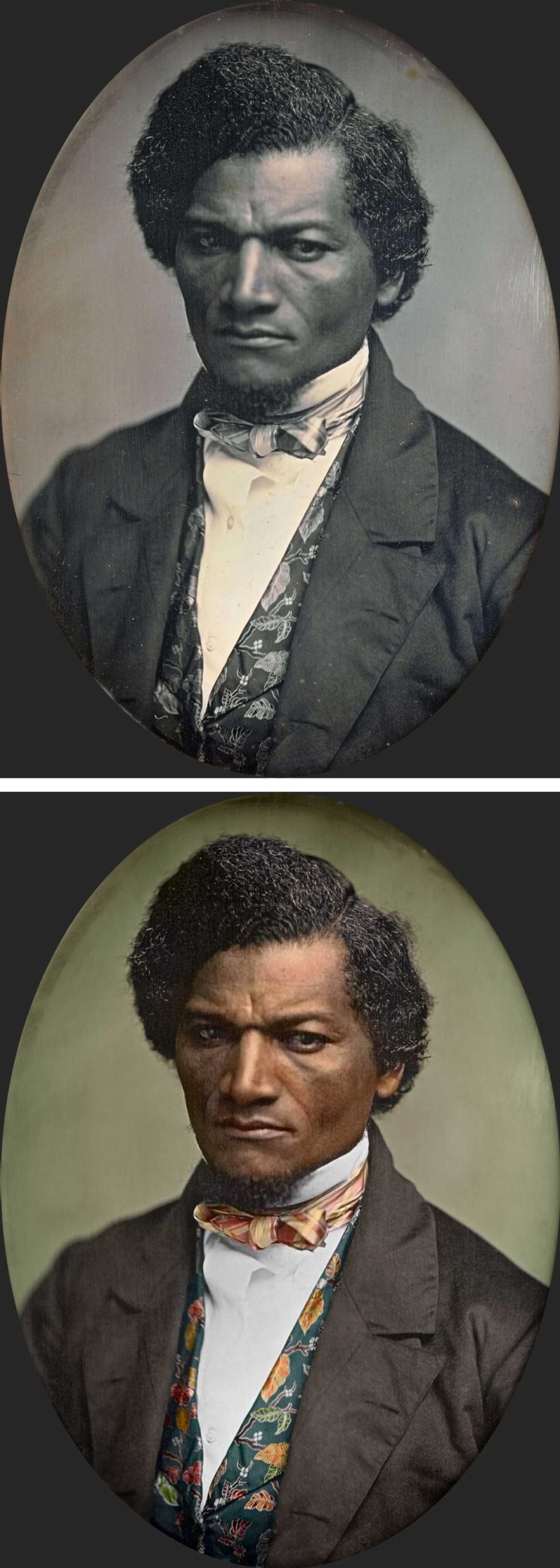
Frederick Douglass meets the viewer with a steady, unblinking gaze, his face set in a seriousness that feels earned rather than posed. The portrait is tightly framed and oval-cropped, drawing attention to the texture of his hair, the sharp planes of his cheekbones, and the composed strength in his expression. Formal dress—a dark coat, patterned waistcoat, crisp shirt, and neatly tied neckwear—signals the deliberate self-presentation that defined so much of his public life.
Details like these mattered in the nineteenth century, when photographs circulated as arguments as much as mementos. Douglass understood the power of the camera to counter caricature and insist on dignity, intellect, and authority, especially amid the nation’s “Civil Wars” of conscience and policy over slavery and freedom. The restrained background leaves no distraction; the portrait’s plainness becomes a stage for character.
For readers exploring abolitionist history, Civil War-era America, and the long struggle for civil rights, this image offers a direct encounter with one of the era’s most influential voices. It also invites a closer look at how portrait photography shaped public memory—how clothing, posture, and expression could become a form of persuasion. Share, cite, or study the photograph as a reminder that the fight over freedom was waged not only on battlefields, but in speeches, newspapers, and the quiet, insistent language of the lens.