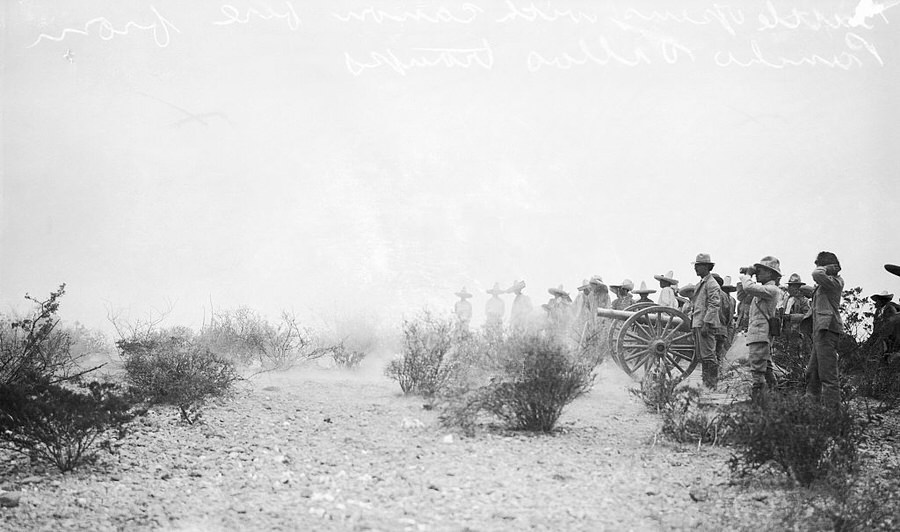
Dust and gun smoke hang low over a scrubby hillside as a field gun is worked into position, the crew and nearby riflemen bracing for the next blast. Wide hats and rough uniforms silhouette against the pale sky, turning individual faces into a single, tense line of fighters. The barren ground and scattered brush emphasize how exposed everyone is in the opening moments of combat.
According to the title, the fighting begins with cannon fire from Pancho Villa’s troops, a stark reminder that the Mexican Revolution was not only a story of cavalry charges and rail lines, but also of artillery and improvised battlefield discipline. The photograph’s composition draws the eye from the cannon’s spoked wheel to the clustered men at the right, then out into the hazy distance where targets and outcomes are swallowed by smoke. It’s a scene that reads like a pause between thunderclaps—commands shouted, shells handled, and nerves held tight.
For readers interested in civil wars and revolutionary warfare, this image offers a vivid look at how a single cannon could set the tone for an engagement, shaping morale as much as terrain. The contrast between the stillness of the landscape and the violence implied by the drifting smoke captures the uneasy rhythm of conflict: long stretches of waiting punctuated by sudden force. Seen today, it serves as a grounded visual document of Pancho Villa’s forces and the hard, dusty reality behind iconic revolutionary legends.