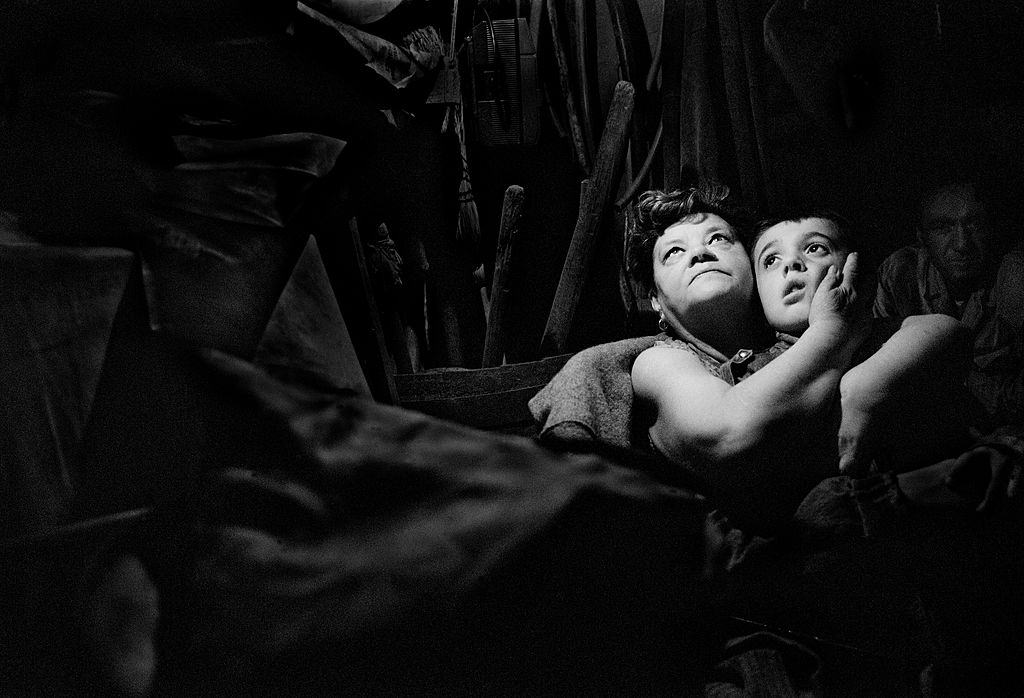
In the cramped darkness of an underground cellar in Sarajevo, 67-year-old Antonia Arapovic pulls a neighbour’s child close, her arm wrapped tight as if it could become a wall. Light falls unevenly across their faces, catching the child’s wide eyes and the woman’s steady, upward gaze, both listening for the next impact. Around them, the space feels improvised and overfilled—blankets, rough surfaces, and the press of other bodies suggesting a refuge that is never fully safe.
War is often recorded through troop movements and shattered buildings, yet the siege is also a story of waiting: the long minutes between blasts, the breath held in unison, the small rituals of protection performed by ordinary people. Antonia’s embrace reads as more than comfort; it is a kind of civic duty in miniature, neighbour to neighbour, when families are separated by fear and the simple act of staying alive becomes communal. The child’s posture—cheek pressed into her hand, eyes turned toward the unseen ceiling—echoes the terror of bombardment without showing a single explosion.
For readers searching for Sarajevo siege history, civil war photography, or the human impact of mortar bombardment, this scene offers a stark, intimate record of life underground. It reminds us that the front line can run through basements and corridors, where age and youth share the same darkness and the same uncertainty. The photograph endures because it holds two truths at once: the vulnerability of civilians in wartime and the quiet, stubborn tenderness that persists even there.