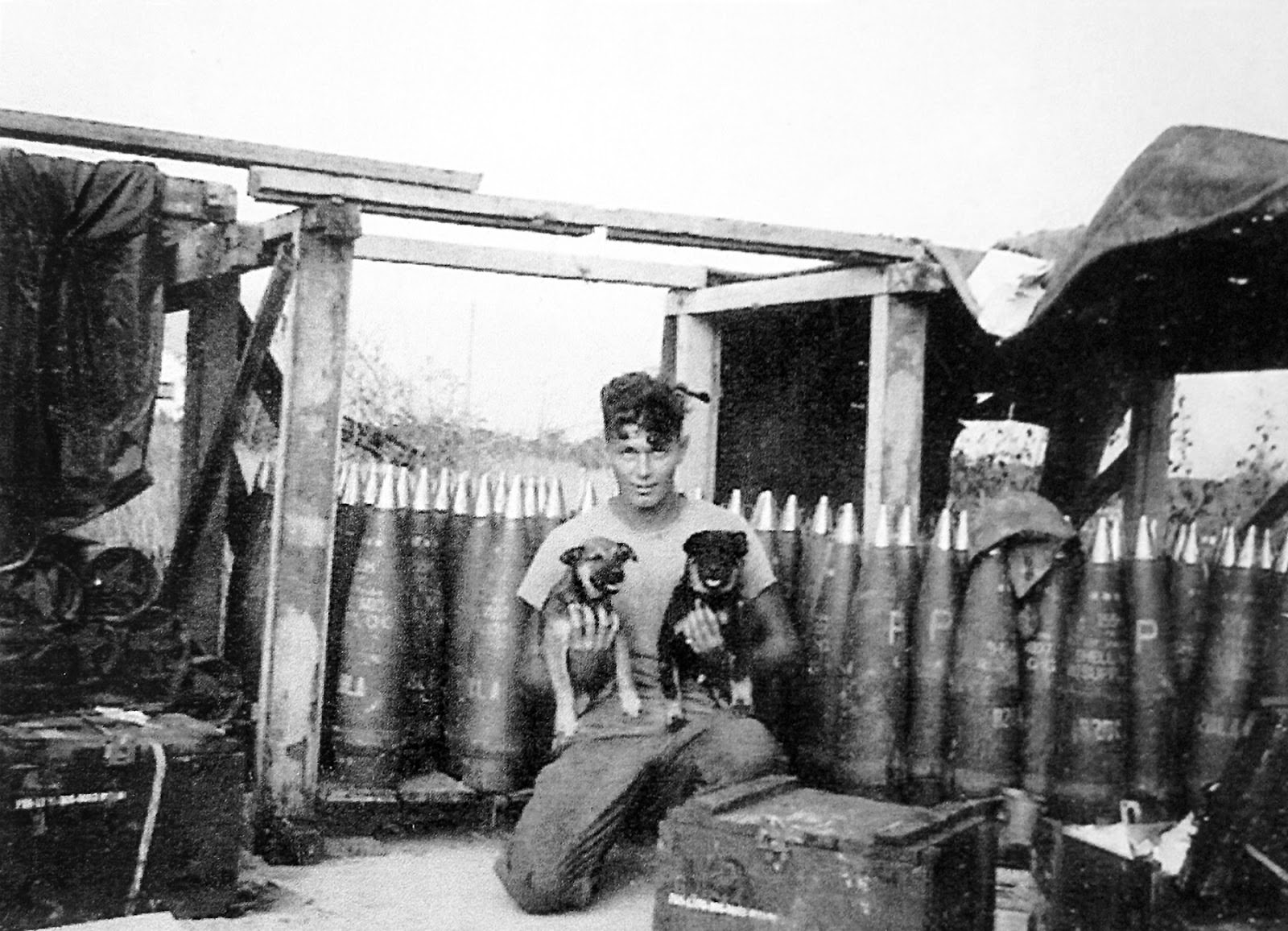
A young serviceman kneels in the dirt of a Special Forces camp in Tay Ninh, Vietnam, holding two small puppies close as if they were precious cargo. Behind him, a rough wooden frame and draped tarps suggest an improvised living space, the kind built quickly and used hard. The line of large munitions shells stacked upright forms an arresting backdrop, a reminder that comfort and danger often shared the same ground during the Vietnam War.
Marvin De Witt’s steady gaze anchors the scene, but it’s the contrast that lingers: soft fur against steel casings, a calm pose amid the clutter of field life. The puppies—one lighter, one darker—look alert and curious, their expressions lending the moment a disarming warmth. Around them sit utilitarian objects like footlockers and gear, details that quietly map the rhythms of camp routine.
Small snapshots like this help broaden the way we remember Vietnam, bringing the everyday human need for companionship into view. Animals often became mascots and morale-boosters in remote posts, offering a brief sense of home in an unfamiliar landscape. For readers searching Vietnam War history, Special Forces camp life, or Tay Ninh wartime photographs, this image stands as an intimate, personal counterpoint to the conflict’s larger story.