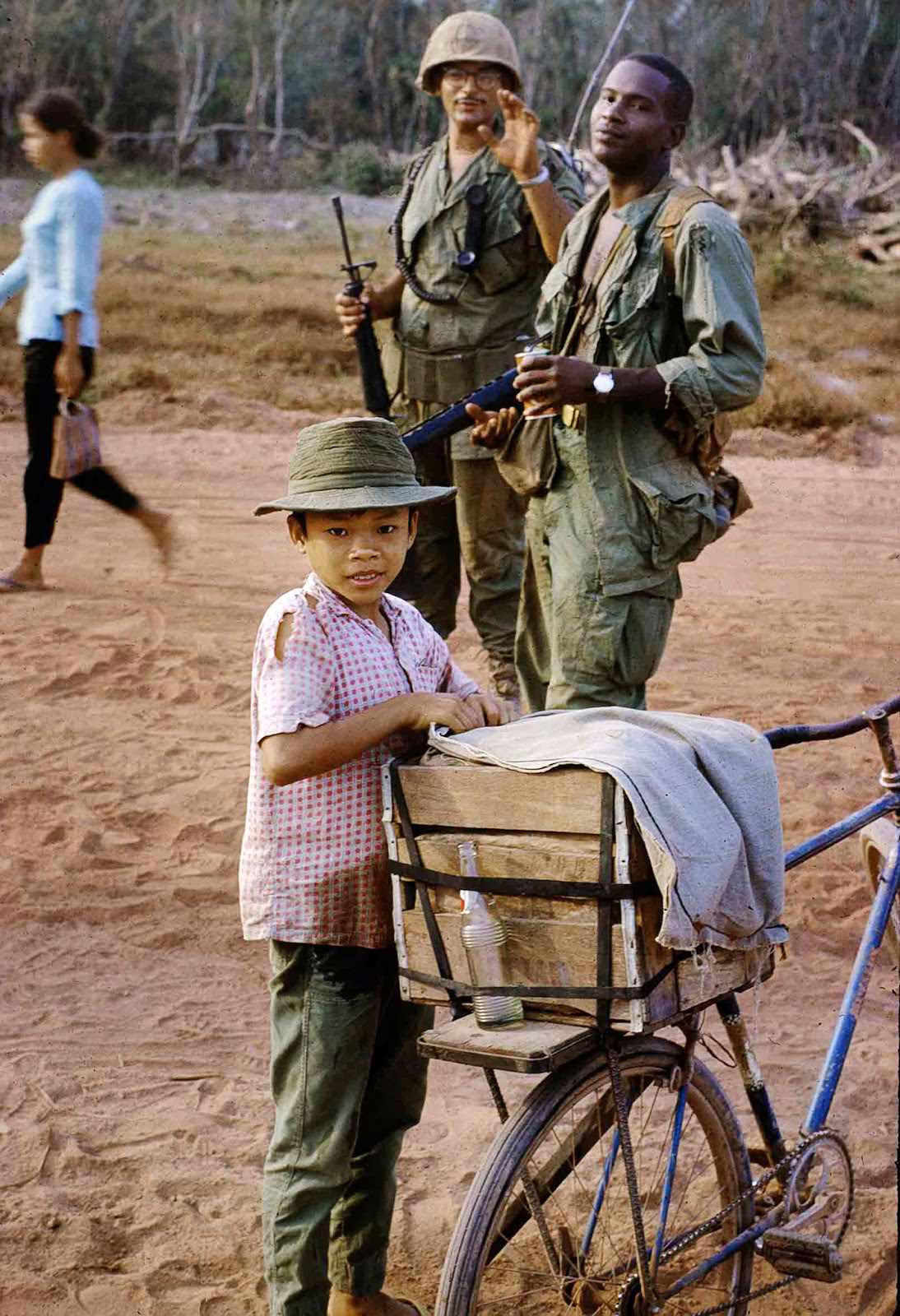
Sunlit dust and scrubby treeline set the stage for a quiet moment in Vietnam, February 1969, where a local boy—nicknamed the “Coke kid”—stands beside a bicycle outfitted with a wooden crate and tied-down gear. His brimmed hat and checkered shirt read as everyday life, yet the improvised cargo and the open road behind him hint at a landscape shaped by war and movement. In the background, a passing figure blurs into the scene, reinforcing the sense of a busy, unsettled wartime routine.
Behind the child, the photographer’s platoon leader, Lieutenant Timor, and a radio telephone operator occupy the frame with the unmistakable weight of military presence. Field uniforms, a slung weapon, and the long antenna of communications equipment underscore how crucial radio contact was for platoons operating in the Vietnam War. The operator’s relaxed posture—hand raised as if mid-gesture—adds a human, almost conversational note to an otherwise tense environment.
What makes the photograph linger is the contrast between childhood entrepreneurship and combat logistics, both sharing the same roadside space. The “Coke kid” becomes a symbol of civilian resilience, navigating soldiers, supply lines, and the constant churn of patrol life with a bicycle and a box. For readers searching Vietnam War history, this image offers a grounded, intimate view of 1969: not a battlefield panorama, but a meeting point where daily survival and military necessity briefly intersect.