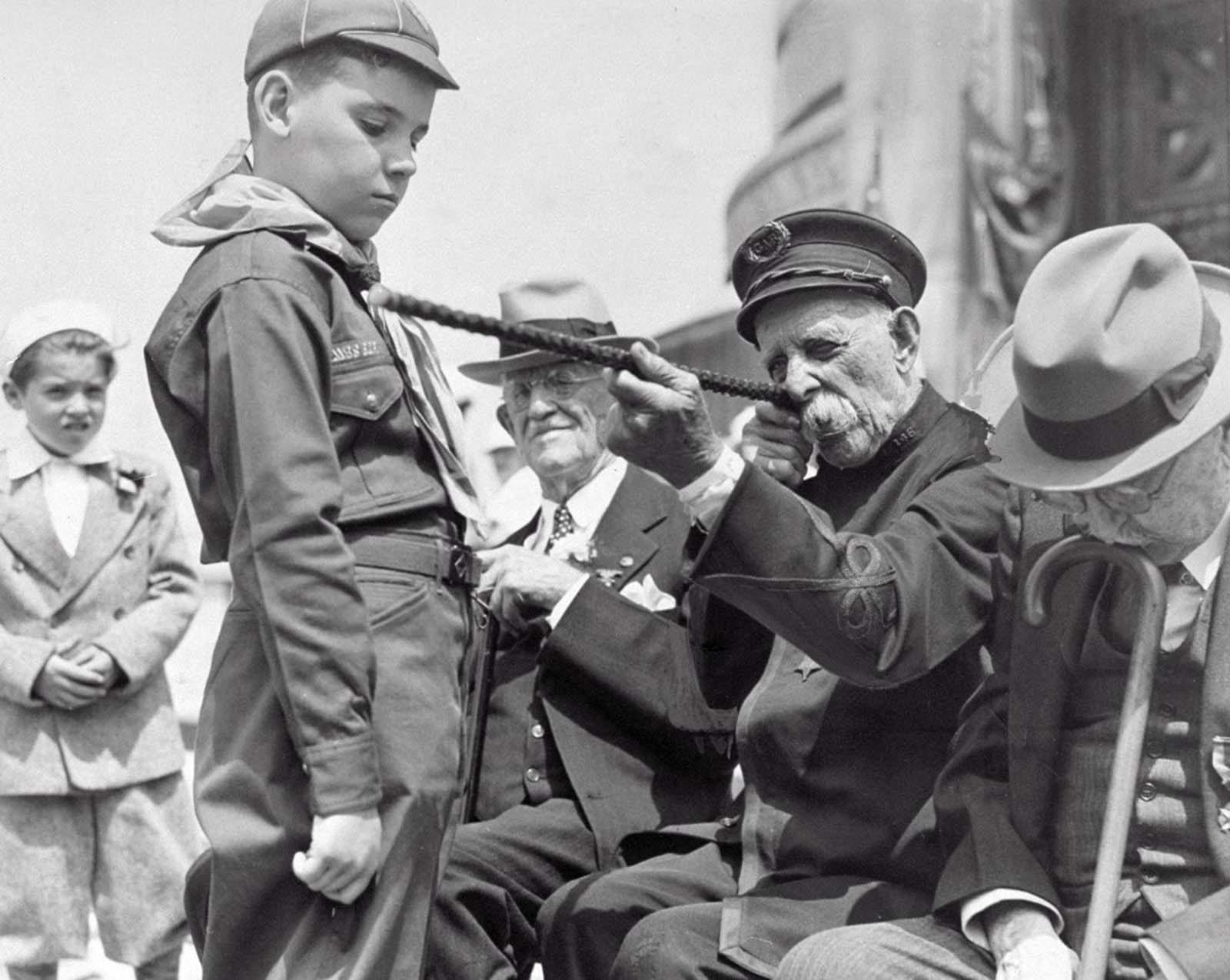
A Boy Scout cub stands at attention in his uniform while 97-year-old Civil War veteran George W. Collier leans forward, squinting down an improvised “barrel” and demonstrating the posture of aiming a rifle. The moment, set during a Memorial Day parade in 1939, feels half lesson and half living memory, with the veteran’s cap, weathered face, and steady hands drawing every eye toward the line of sight he’s tracing.
Behind them, other parade-goers and older men in hats look on, bridging generations in a single candid frame. The boy’s serious expression suggests he understands this is more than a trick of marksmanship; it’s a story being passed down at street level, amid the ceremony and crowd that annually gathers to honor the nation’s war dead.
As a piece of American history, the photograph speaks to how the Civil War lingered in public life well into the twentieth century, not only in speeches and monuments but in face-to-face conversations between elders and youth. For readers searching for Memorial Day parade history, Civil War veterans in 1939, or the early culture of Boy Scouts in America, this image offers an intimate reminder of how remembrance often happens in small, unscripted gestures.