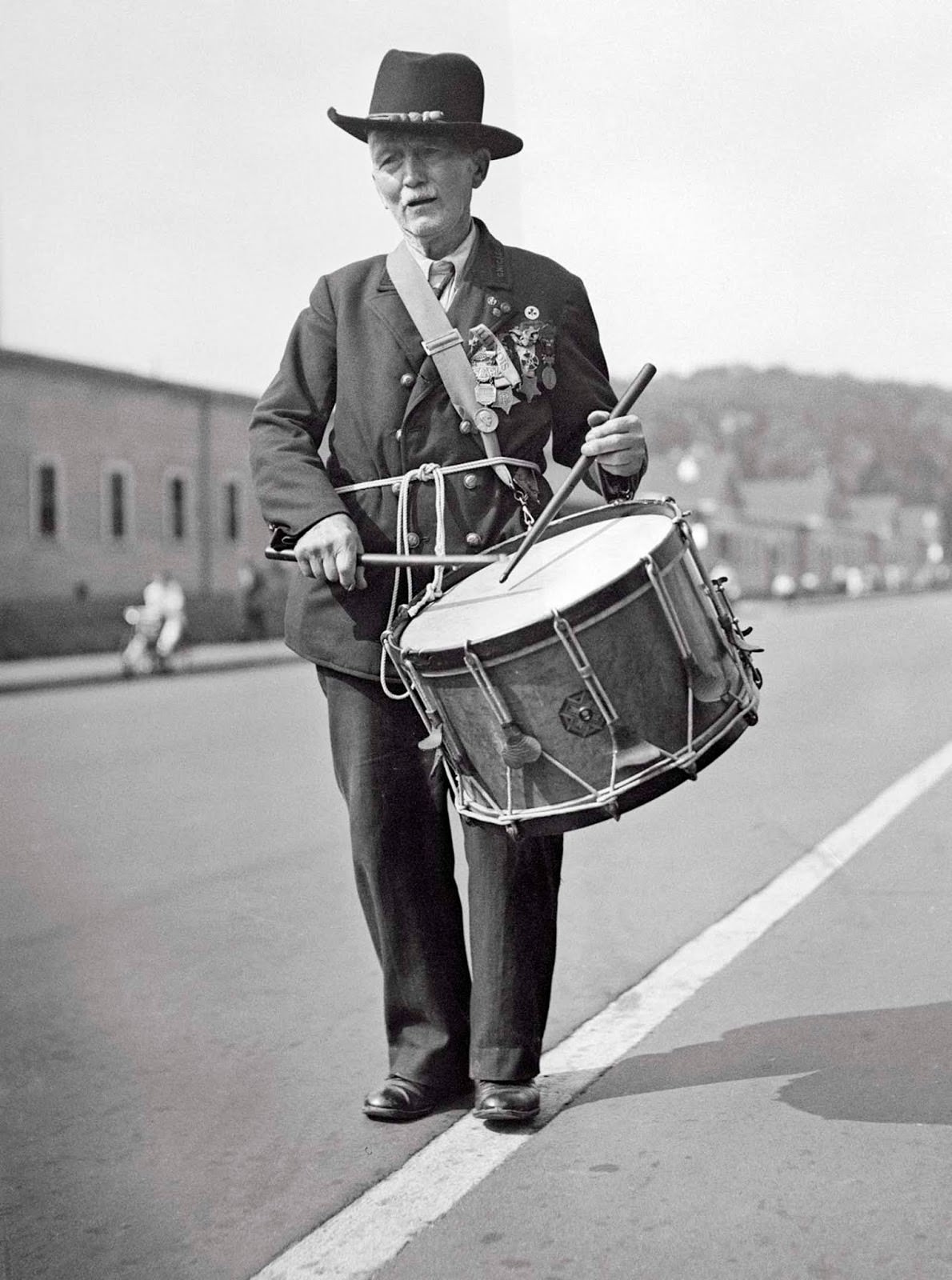
Along a Washington, D.C. street, Captain R.D. Parker stands with a rope-slung field drum resting at his hip, drumsticks poised as if the next cadence is only a breath away. His dark hat and double-breasted coat give him a formal, almost ceremonial presence, while the cluster of medals on his chest speaks quietly of long service and public remembrance. The background fades into soft shapes—buildings, roadway, and distant figures—leaving the veteran and his instrument as the clear focal point.
At 90 years old, Parker is described as a man who once played a drum at Abraham Lincoln’s inauguration, and that detail turns this portrait into a living bridge between eras. The drum itself becomes more than a prop: it’s a surviving tool of pageantry, military routine, and morale, carried forward into a later generation’s act of honoring the past. Even without hearing a single beat, the photograph suggests movement and sound, the steady pulse that once kept marching feet together.
Marking the final parade of the Grand Army of the Republic during the closing of its 70th annual encampment, the scene captures a last, dignified chapter in the public life of Civil War veterans. Founded in 1866, the GAR shaped how the United States remembered the conflict—through reunions, rituals, and visible symbols like uniforms, badges, and drums. For readers drawn to Civil War history, Washington, D.C. parades, and the story of veteran organizations, this image offers an intimate glimpse of memory made public, one marcher at a time.