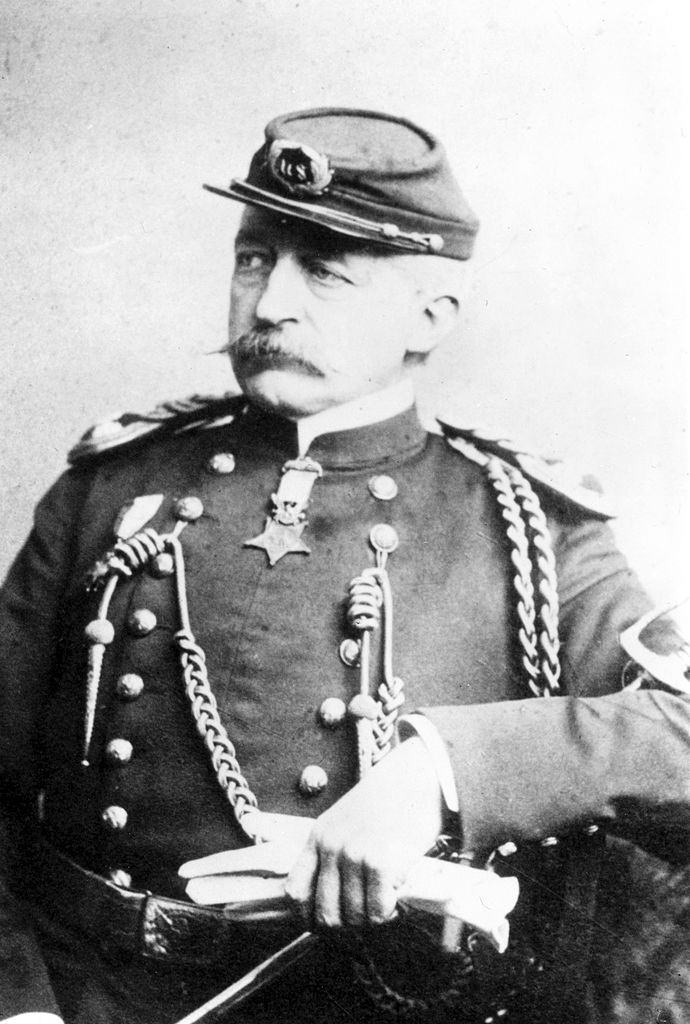
Colonel George Edward Gouraud (1841–1912) appears here in formal uniform, posed with a steady, slightly distant gaze that suits a career shaped by war and public service. The crisp cap insignia, braided cords, and double rows of buttons emphasize the ceremonial side of military life, while his composed posture hints at long familiarity with discipline and command. A prominent star-shaped medal at his chest draws the eye, suggesting official recognition and the prestige attached to decorated officers of the era.
Details in the portrait reward a closer look: the carefully groomed moustache, the clean line of the high collar, and the controlled lighting that brings out the texture of cloth and metal. He holds papers or a document bundle in one hand, a small but telling prop that evokes orders, correspondence, and the administrative realities that accompanied battlefield experience. Together, these elements create a classic 19th-century military portrait—part personal likeness, part statement of rank and accomplishment.
For readers exploring American Civil War history, images like this offer more than a face; they convey how veterans wished to be remembered in the years after the conflict. Gouraud’s portrait serves as a visual entry point into the world of Civil War-era officers and the evolving culture of commemoration, medals, and professional identity. Whether you’re researching notable veterans, collecting historical photographs, or tracing the iconography of military dress, this post provides a compelling glimpse into the legacy of a Civil War colonel.