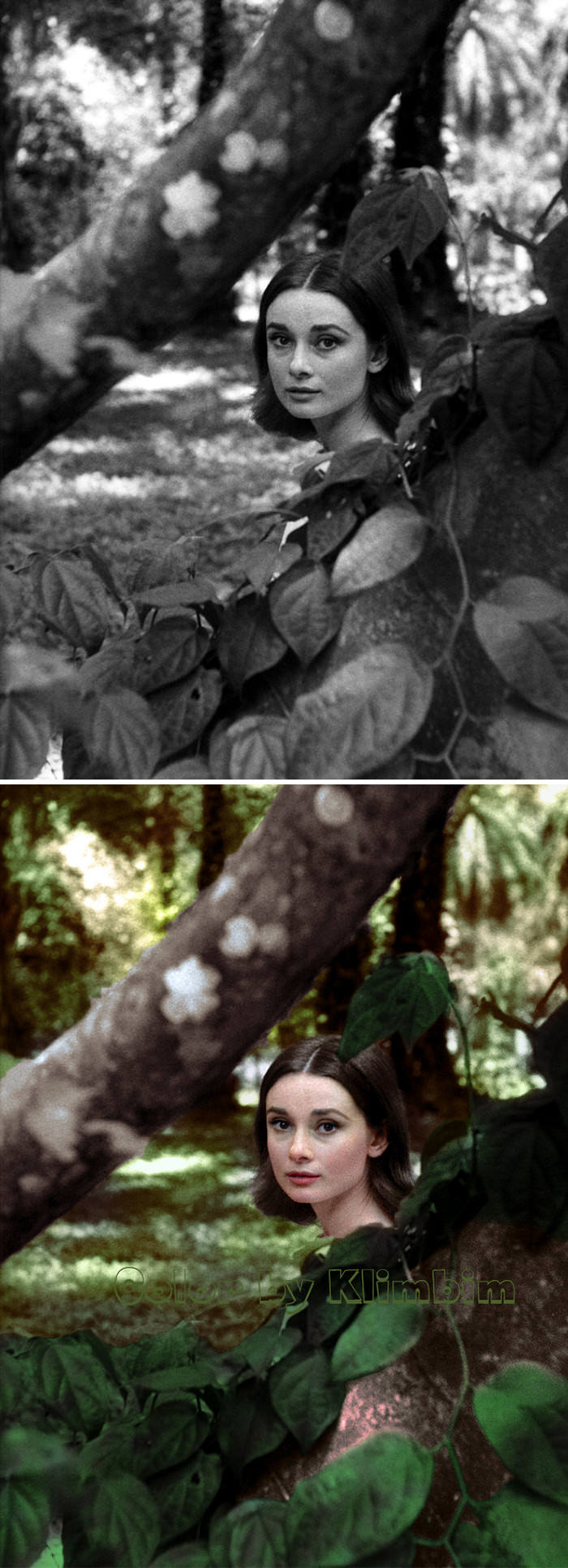
Framed by broad leaves and a mottled tree trunk, Audrey Hepburn’s face emerges from the shade with that unmistakable calm poise. The composition feels intentionally intimate: branches cut diagonally across the scene, softening the background while drawing the eye to her direct, unguarded gaze. Even without studio glamour, the portrait carries the refined elegance that made her an enduring icon of classic Hollywood.
In the black-and-white original, light filters through the canopy in gentle patches, turning the setting into a quiet, natural stage. The colorization brings a different kind of immediacy—greens deepen, skin tones warm, and the forest-like backdrop becomes a living environment rather than a tonal suggestion. Together, the paired versions invite viewers to compare how mood, texture, and era shift when a monochrome photograph is reimagined in color.
For readers searching Audrey Hepburn photos, rare portraits, or vintage colorization work, this post offers a close look at how subtle retouching can change the way we read a familiar figure. The leaves in the foreground create a sense of privacy, as if we’re catching a moment between poses rather than a performed publicity shot. It’s a reminder that Hepburn’s legacy rests not only on famous roles and red-carpet styling, but also on quieter images that preserve her presence with remarkable clarity.