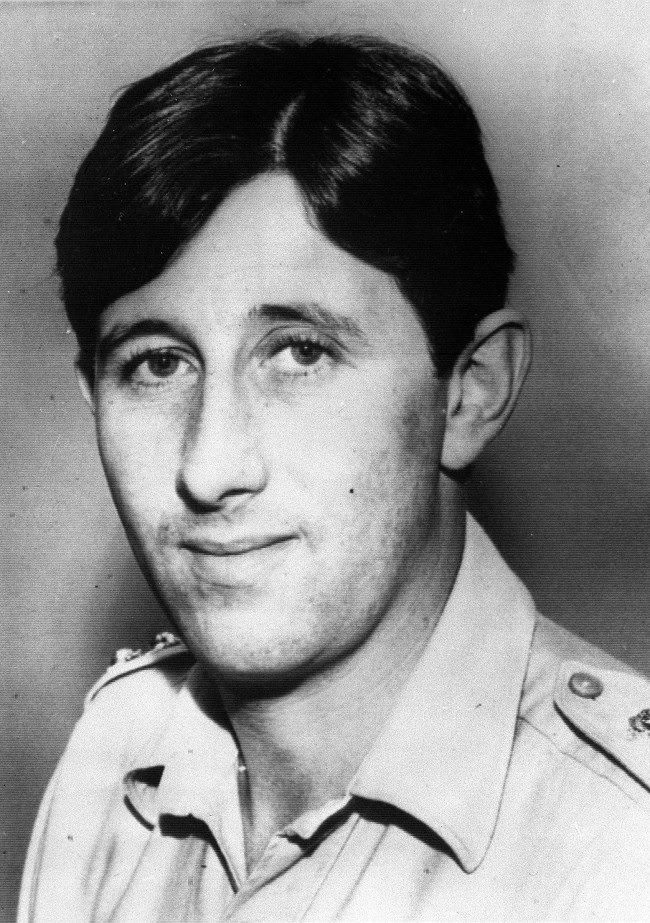
A young officer’s portrait looks out with a steady, almost conversational calm, the uniform collar and shoulder details hinting at rank and responsibility without spectacle. The title identifies him as Captain David Stewardson, only 29, serving as a Royal Army Ordnance Corps disposal expert—work that demanded patience, precision, and a constant awareness that one wrong movement could be final. In a single frame, the face of a specialist becomes the face of a wider, unnamed peril.
Behind the formal simplicity of the photograph lies the brutal reality described in the post title: a booby trap bomb detonated while he was attempting to defuse it, and he later died in a Belfast hospital from blast wounds. That brief account compresses a whole chain of events—alarm raised, cordons formed, a technician called forward—into the starkest of outcomes. For readers tracing the human cost of civil conflict and political violence, this image anchors the story in an individual life rather than in statistics.
Placed in the context of 1971, the photograph resonates as a reminder of how bomb disposal shaped daily fear and public safety during the Troubles, when ordinary streets could be turned into lethal puzzles. The quiet dignity of the portrait contrasts sharply with the danger of the role, making it a powerful historical document for those researching Belfast bombings, Royal Army Ordnance Corps service, and the lived experience of emergency response. Remembering Captain Stewardson through this image keeps the focus on service, risk, and loss—elements too easily blurred by the passage of time.