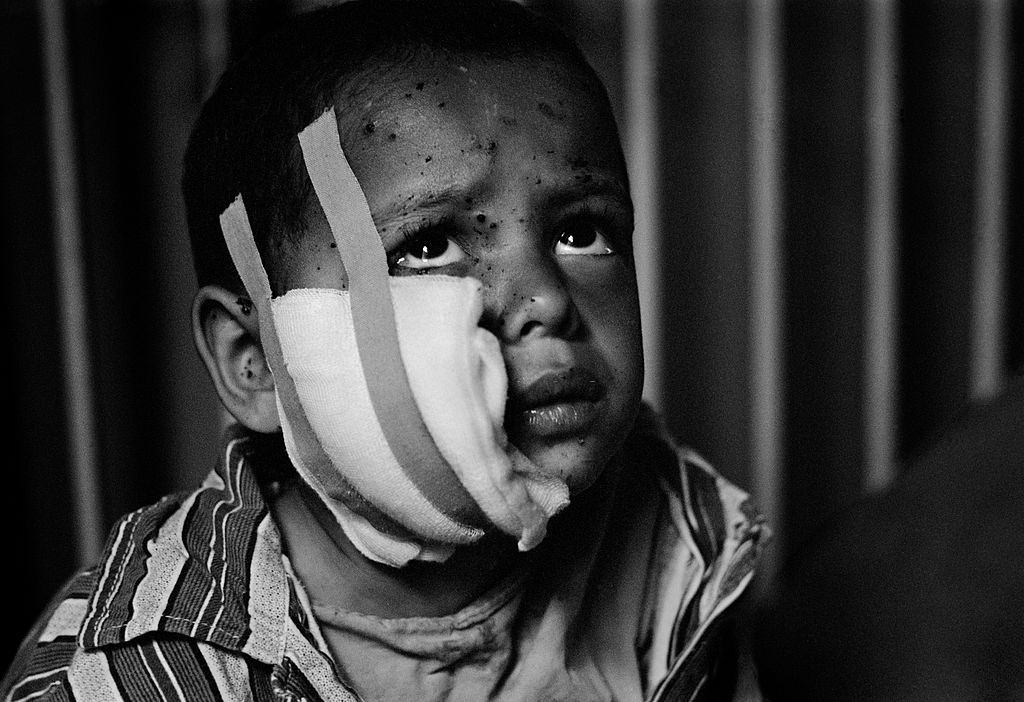
A child’s face, dotted with shrapnel wounds and held in place by broad strips of medical tape, turns slightly upward in a Sarajevo hospital ward during the siege in 1992. The tight crop leaves little room to look away: bruising, grit, and bandaging dominate the frame, while the boy’s wide eyes carry the kind of fear that outlasts the moment. Even without a wider view of the room, the sense of confinement and vulnerability is unmistakable.
War in the former Yugoslavia was fought not only on front lines but in streets, apartment blocks, and queues for daily necessities, where civilians were exposed to shelling and fragments that tore through bodies without warning. The hospital setting implied by the title becomes a secondary subject here, a reminder of overwhelmed medical systems trying to treat mass casualties with limited supplies. Shrapnel injuries, especially to the face, speak to the randomness of explosive violence—how it marks the innocent and makes childhood feel suddenly, brutally adult.
Placed within the broader history of civil wars and urban sieges, this photograph functions as both evidence and elegy, recording the human cost that statistics cannot translate. It is a stark, SEO-relevant document of the Sarajevo siege, wartime medical care, and the impact of artillery and fragmentation on civilians, especially children. Above all, it asks the viewer to confront what “collateral damage” really looks like when it has a name only in the category of “boy,” and a story that countless families lived through.