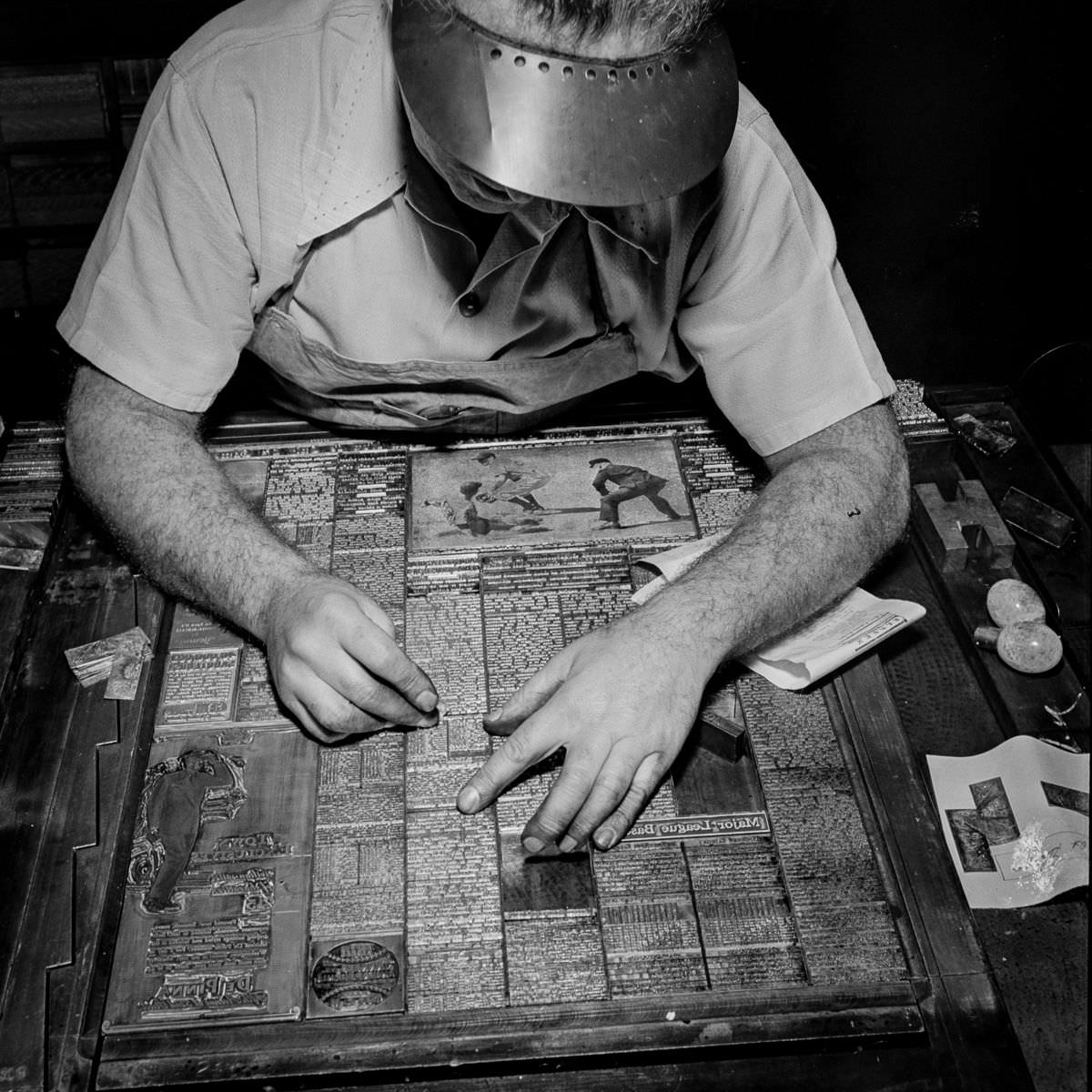
Bent over a metal forme, a compositor in a protective visor methodically locks the sports section into place, one tiny block at a time. The page is a dense mosaic of type and rules, with a small action photograph set among columns that would have carried scores, lineups, and quick game stories. Ink-stained hands and a cluttered bench of tools underscore how physical newspaper production once was—precision achieved through touch, patience, and practiced sight.
In the composing room, “assembled” meant more than arranging words; it meant engineering a printable surface sturdy enough to survive the press. Each paragraph was built from individual pieces of metal type, tightened with wooden or metal furniture and secured so nothing could shift under pressure. Even the sports page, so immediate and fast-moving in content, depended on slow, exacting craft before it could reach readers.
The result was yesterday’s excitement turned into durable form: a snapshot of the early newsroom workflow where reporting met manufacturing. For anyone interested in the history of newspapers, printing technology, or the inventions that shaped mass communication, this scene offers a close look at the hidden labor behind a daily edition. It’s a reminder that every headline and box score once began as a hand-built puzzle in the glow of the composing room.