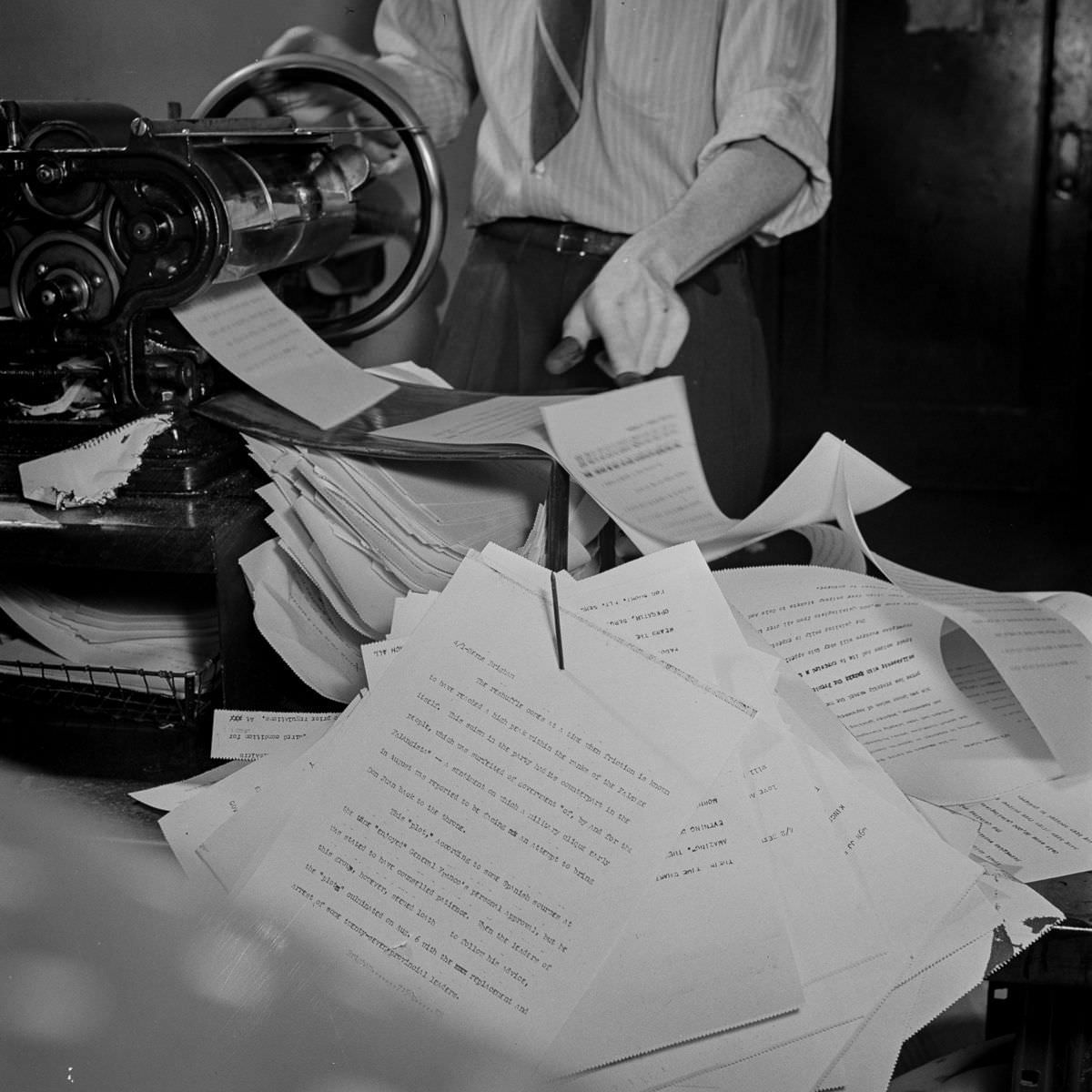
Ink-stained pages spill across the table as dispatches pass through the mimeograph, fresh lines of type still sharp against the paper. The machine’s rollers and handwheel sit remindfully close, a compact engine for multiplying words when speed mattered and carbon copies weren’t enough. In the cropped view of an office worker’s sleeves and tie, the emphasis falls on labor and output rather than identity, turning the scene into a study of process.
Before photocopiers and email, the mimeograph was a practical invention that powered newsletters, memos, instructions, and urgent bulletins with a brisk, mechanical rhythm. One stencil could yield stacks of near-identical sheets, and the growing pile in the foreground hints at an operation in full stride—documents reproduced, sorted, and sent onward. Even without readable details, the formatting and dense paragraphs suggest official communication meant to be circulated widely.
There’s a quiet drama in the clutter: papers curling at the edges, overlapping drafts, and the sense that information is moving faster than the hands feeding the machine. For readers interested in the history of printing technology and office life, this historical photo offers a textured glimpse into how modern organizations scaled their messages. “Dispatches pass through the mimeograph” captures a transitional era when inventions transformed paperwork into rapid distribution, one turn of the crank at a time.