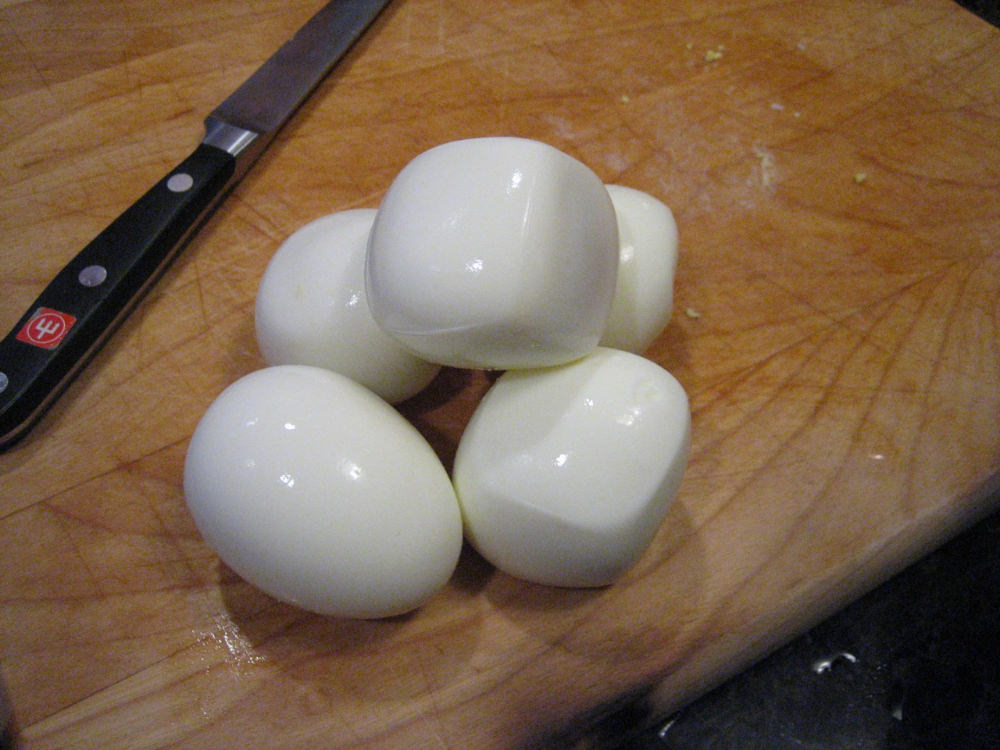
Oddly geometric hard‑boiled eggs sit on a well-worn wooden cutting board, their corners softened but unmistakably squared off like little kitchen dice. A chef’s knife lies nearby, hinting at the promise behind the gimmick: tidy slices, uniform sandwiches, and canapés that stack with machine-like precision. Even without the device in view, the result points straight to the era’s fascination with reshaping everyday food into something modern.
The so-called egg cuber belongs to that delightful corner of 1970s invention culture where convenience met spectacle on the countertop. Turning an oval egg into a cube didn’t solve a great culinary crisis, yet it offered a small, satisfying illusion of order—food engineered to fit perfectly on bread, in lunchboxes, or on party trays. In a decade that loved clever kitchen gadgets, the square egg became a conversation piece as much as an ingredient.
Seen today, the “squarest invention of all time” reads like a wink from the past, a reminder that innovation isn’t always about necessity—it’s often about novelty. The photo’s simple setup—a few glossy eggs, a cutting board, and a blade—invites curious readers to imagine the process and the pitch that sold it. For anyone searching vintage kitchen inventions, retro food trends, or quirky 1970s gadgets, the egg cuber is a compact legend: strange, practical in tiny ways, and unforgettable.