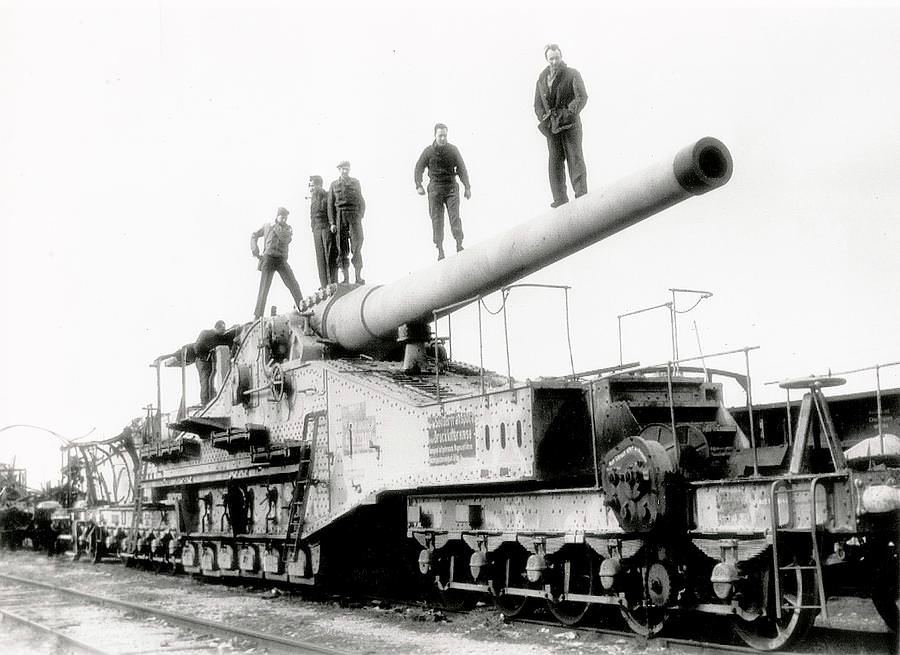
Towering over the rail yard like a piece of industrial architecture, the Gustav Gun dominates the frame with its impossibly long barrel and sprawling carriage. Several men stand atop the weapon, their small silhouettes providing the only reliable sense of scale as riveted plating, ladders, and platforms step down toward the tracks. Even in a still image, the machine feels heavy with intent—built to be moved by rail, assembled with meticulous metalwork, and pointed toward targets far beyond the horizon.
What makes this relic so arresting is the contradiction at its core: extraordinary engineering devoted to destruction. The photo lingers on the practical details—multiple wheel sets, reinforced structure, and the sheer width of the chassis—hinting at the logistical burden required to operate such a supergun. As a snapshot of Nazi engineering inventions, it invites readers to consider not only technical ambition, but also the wartime thinking that prized spectacle, range, and psychological impact alongside battlefield utility.
Seen today, the Gustav Gun functions as a cautionary monument in steel, a reminder that innovation is never morally neutral. For historians and curious visitors to the past, images like this help translate abstract numbers—caliber, weight, distance—into something instantly comprehensible: human figures dwarfed by a single weapon. If you’re exploring WWII technology, German superweapons, or the history of military engineering, this post offers a stark doorway into the era’s obsession with size, power, and the machinery of conquest.