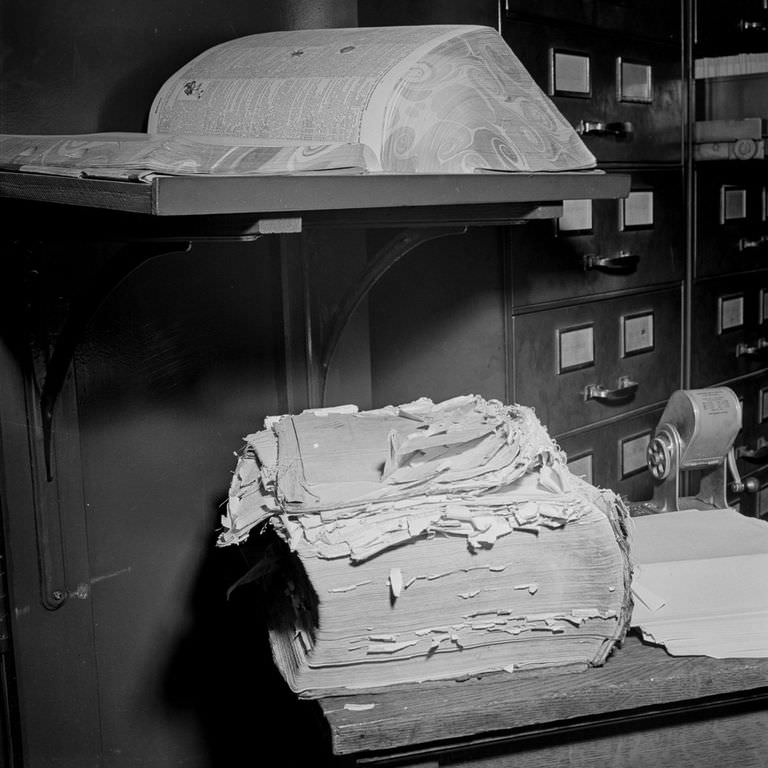
Tucked among rows of metal file drawers, two hefty dictionaries rest on a work surface like tools between shifts—one opened wide, the other worn into a frayed block of paper and cloth. The setting evokes the newsroom “morgue,” that back-room archive where clippings, reference books, and hard-won facts waited to be retrieved. Even without people in the frame, the scene feels busy: the open pages suggest a question mid-search, while the battered volume testifies to years of hands thumbing the same sections again and again.
Language here is treated as an invention in itself, engineered and re-engineered through daily use. Dictionaries were not decorative objects in such spaces; they were working machines for spelling, meaning, and standardization, consulted under deadline pressure and in the quiet maintenance of accuracy. The contrast between “old and new” is visible in the physical condition alone—freshly spread sheets above, and below a thick, scarred testament to how quickly reference materials could age when knowledge and style kept moving.
Behind these books, the drawers hint at a larger ecosystem of information management, long before digital search made retrieval feel effortless. A historical photo like this offers a tactile reminder of how facts were verified: by pulling files, checking references, and leaning on printed authority that could literally wear out from overuse. For readers interested in journalism history, archives, and the material culture of knowledge, this image captures the quiet labor that underpinned every polished paragraph that reached the public.