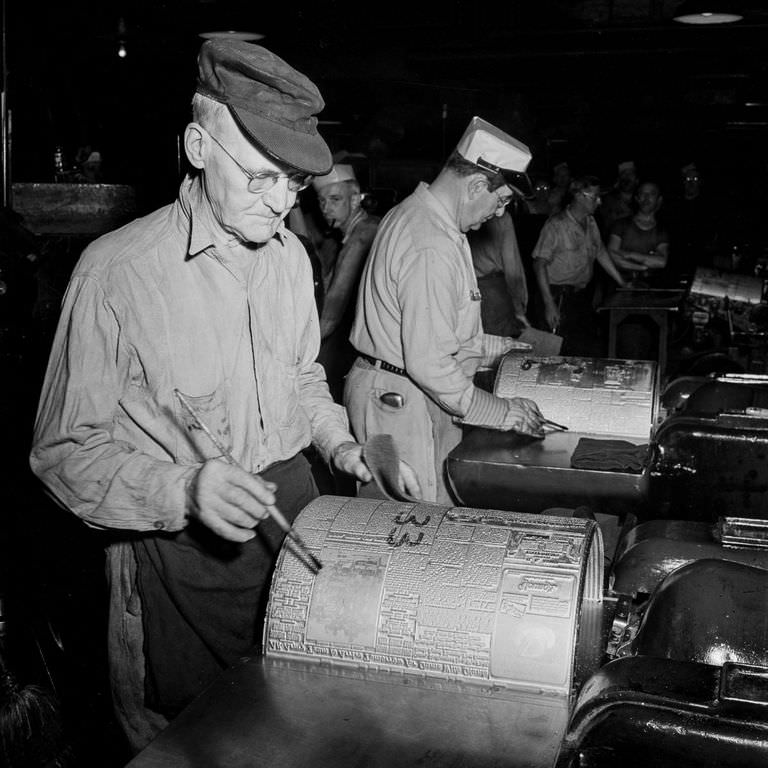
Ink-stained hands and concentrated faces lean over the rounded surfaces of press cylinders, where cast plates carry dense columns of type and small advertisement blocks. Under the hard glow of factory lighting, workers in caps and work shirts methodically check the layouts, their tools poised for quick corrections before the machinery roars to full pace. The scene is all precision and repetition—an industrial rhythm built from metal, paper, and practiced judgement.
Page numbers, applied directly to the cast plates, turn a complex production flow into something trackable: a simple identifier that keeps sections in order as plates move from inspection to mounting. On a busy press line, that numbering system prevents mix-ups, speeds changeovers, and makes troubleshooting possible when a page prints wrong or arrives out of sequence. What looks like a small detail in the title becomes a quiet invention of workflow, linking craftsmanship to early mass communication.
Behind the foreground figures, more staff gather along the pressroom floor, suggesting the teamwork required to produce a newspaper or other large print run at scale. The photo offers a close look at legacy printing technology—stereotype or cast plate processes—where information was literally shaped in metal before reaching the public. For readers interested in the history of inventions, industrial printing, and newspaper production, this moment captures how identification marks like page numbers helped transform complex machinery into reliable daily output.