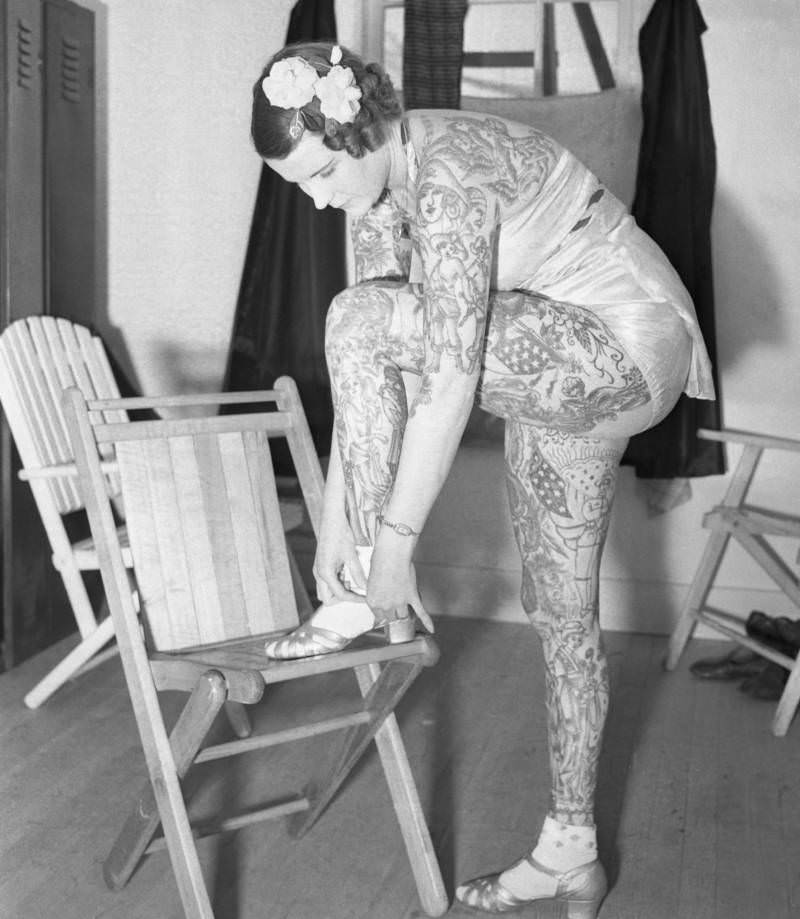
In a quiet backstage room at the fair in Flushing, Queens, Betty Broadbent bends over a folding chair to fasten a sandal, caught in the practical rituals that come before the spotlight. Flowers pin back her dark hair, and a simple costume keeps the focus where audiences expected it: on the dense tapestry of tattoos covering her arms and legs. Lockers, draped fabric, and spare chairs frame the scene with an unglamorous honesty that makes the moment feel lived-in rather than staged.
Every inch of visible skin reads like a gallery wall, crowded with figures, patterns, and bold shapes that would have been startlingly transgressive to many viewers in 1939. The pose is unguarded, almost domestic—more like someone getting ready for an evening out than a performer preparing to be gawked at—yet the body art turns the everyday act of adjusting footwear into part of the performance. That tension between ordinariness and spectacle is exactly what gives this historical photo its charge.
Seen today, the image works as more than “weird” fairground curiosity; it’s a window into American sideshow culture and the complicated fame of the tattooed lady. Broadbent’s calm concentration suggests professionalism and control, reminding us that these performers navigated both admiration and judgment while making a living on the midway. For anyone searching for 1939 New York history, vintage fair photographs, or early tattoo culture, this candid preparation scene in Queens offers an unforgettable glimpse behind the curtain.