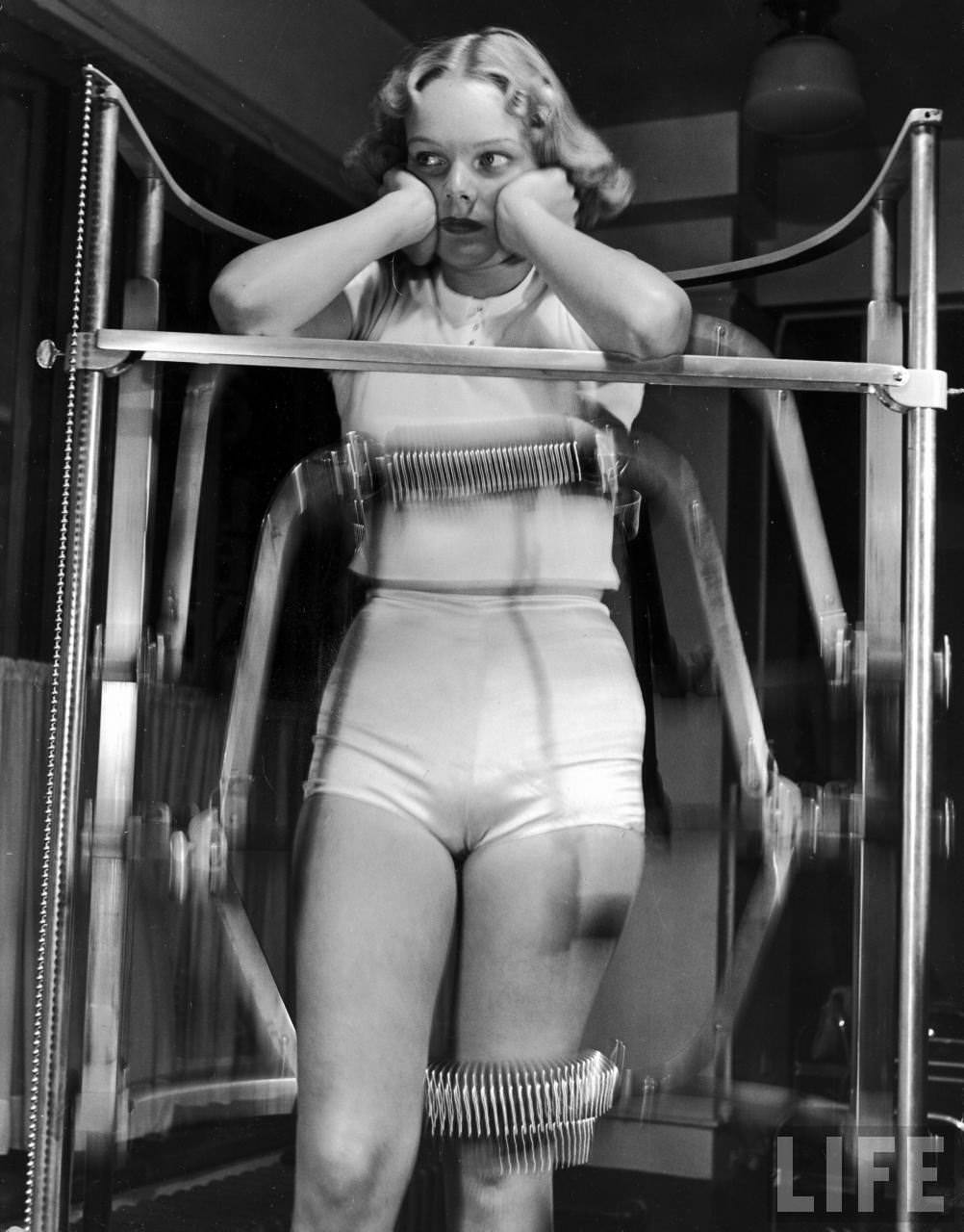
Model Pat Ogden leans into the monotony of a “slenderizing salon,” her chin propped on her hands as a belt of rollers blurs with motion across her midsection. The Slendo Massager dominates the frame with its upright metal supports, straps, and moving parts, turning the promise of a trim figure into a visibly mechanical ritual. Even without hearing it, you can almost imagine the steady hum and clatter that accompanied these electrically driven treatments.
Beauty culture has long chased quick fixes, and devices like this reveal how modernity was marketed as body improvement—engineering applied to hips, thighs, and stomach with the confidence of an invention brochure. The photograph balances glamour and skepticism: a model in streamlined attire posed for the camera, yet looking weary as the apparatus does its work. It’s an arresting snapshot of a moment when “reducing” machines, vibration therapy, and salon technology blurred the line between health fad and consumer spectacle.
For readers interested in vintage inventions and the history of fitness and weight-loss trends, this image is rich with detail and contradiction. The Slendo Massager isn’t just a quirky contraption; it’s a reminder of how commercial beauty standards were packaged as science, sold through photographs that promised transformation without sweat. Viewed today, it stands as both period curiosity and cautionary tale—an early chapter in the long story of effortless-body marketing.