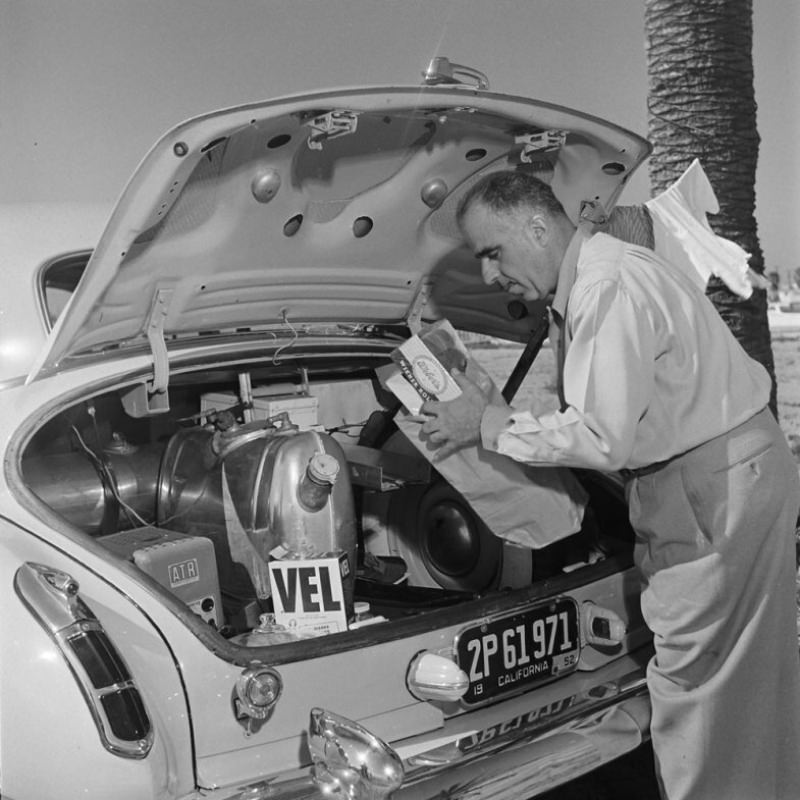
With the trunk lid swung high like a stage curtain, Louis Mattar leans into the rear of his heavily modified 1947 Cadillac and produces the makings of a roadside meal. The scene is part practicality, part showmanship: everyday groceries and supplies sit beside an array of equipment that hints at experiments and custom engineering. Even without a full view of the car’s alterations, the open compartment reads like a traveling workshop where dinner and design share the same space.
What stands out is the mix of domestic routine and mechanical ambition—food packaging alongside hardware, containers, and neatly packed components. A California license plate is visible at the bumper, grounding the moment in an unmistakably American car culture that prized both comfort and ingenuity. The palm trunk at the edge of the frame and the crisp sunlight add to the sense of a stop made mid-journey, when the road becomes kitchen, laboratory, and proving ground all at once.
Moments like this help explain why “inventions” often begin not in factories but in trunks, garages, and improvised setups built by restless minds. Mattar’s Cadillac becomes more than transportation; it’s a rolling demonstration of how postwar enthusiasm for gadgets and modifications seeped into daily life. For readers drawn to automotive history, roadside Americana, and the human stories behind mechanical innovation, this photo offers a vivid, approachable window into that inventive spirit.