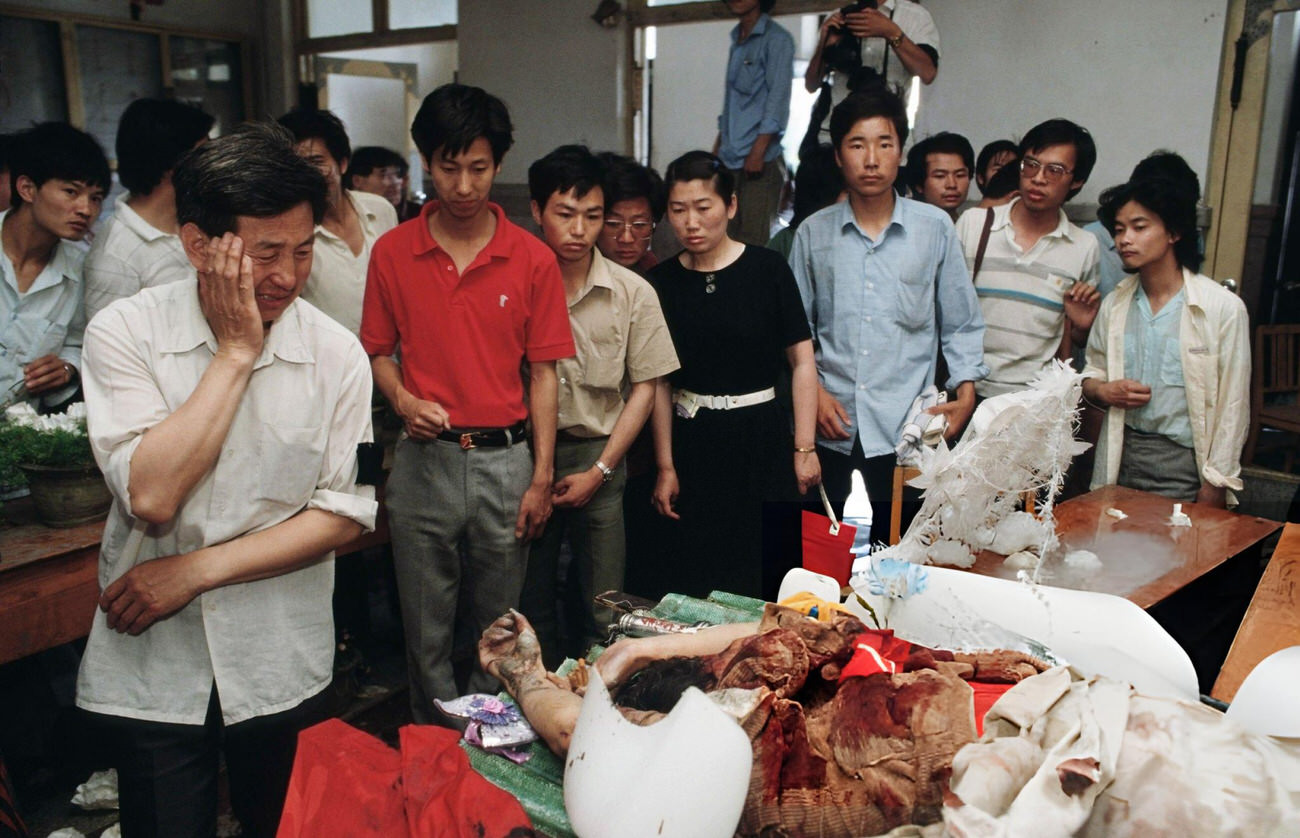
Grief hangs in the air of a cramped, makeshift morgue as a crowd gathers around a stretcher. Faces tighten and eyes drop toward the body of a protestor laid out amid rumpled sheets and improvised coverings, the room’s ordinary furniture suddenly repurposed for tragedy. One man shields his face with his hand, while others stand shoulder to shoulder, silently measuring what they see and what it means.
The scene evokes the brutal intimacy of civil wars and political unrest, when public conflict forces private mourning into shared spaces. In 1989, as protest movements and state responses collided in various parts of the world, temporary morgues like this became grim junctions of witness, identification, and rumor—places where families and friends searched for answers, and where communities confronted the cost of dissent. The presence of onlookers suggests more than curiosity; it reads as a collective need to verify, to remember, and to resist forgetting.
For readers tracing the human history behind headlines, the photograph offers a stark document of how violence reshapes everyday life. Details—creased clothing, strained expressions, the crowded doorway, and the improvised setup—underscore the chaos that follows mass confrontation and the hurried logistics of death in a crisis. As an archival glimpse into 1989 protest history, it stands as a sobering reminder that behind every slogan and street march are bodies, witnesses, and the long aftermath carried by those left to look.