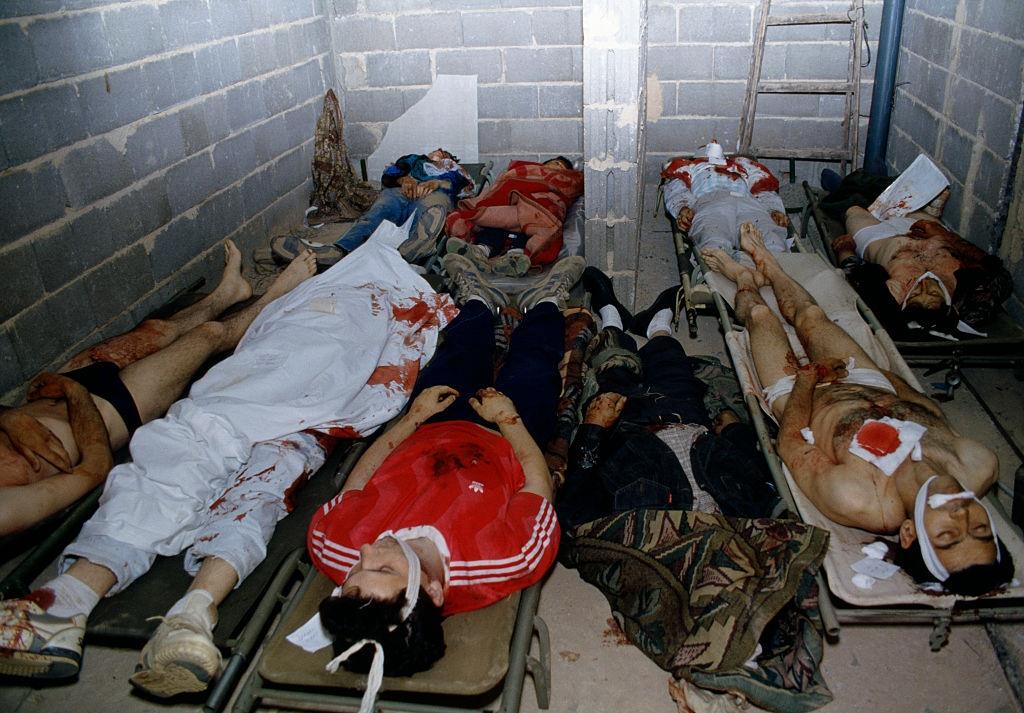
Inside a cramped Sarajevo morgue, bodies lie arranged on stretchers and makeshift bedding, the concrete-block walls and harsh lighting offering no comfort from what has been brought in from the streets. Bandages, bloodstains, and personal clothing remain, small reminders that these were ordinary lives interrupted by war. A ladder leans against the back wall and blankets are pulled over some forms, details that underline how improvised and overwhelmed such spaces could become during the Yugoslav civil war.
War history is often told through front lines and political maps, yet a morgue reveals the conflict’s true arithmetic: the accumulation of loss, one victim after another, in rooms never meant to hold so many. The scene suggests emergency triage carried beyond its limits, where identification and dignity must compete with scarcity, speed, and fear. In Sarajevo, a city synonymous with siege and civilian suffering, this kind of image anchors abstract headlines to the physical realities of violence.
For readers exploring the Yugoslav wars, Bosnia and Herzegovina’s wartime experience, or the humanitarian toll of civil conflict, this photograph serves as stark documentary evidence of how quickly society’s routines collapse. It also raises quiet questions about who is tasked with care when institutions strain—medical staff, volunteers, and families confronting grief amid chaos. The post title points to Yugoslavia’s fragmentation, but the morgue’s silence speaks more broadly about what civil wars do to communities long after the gunfire fades.