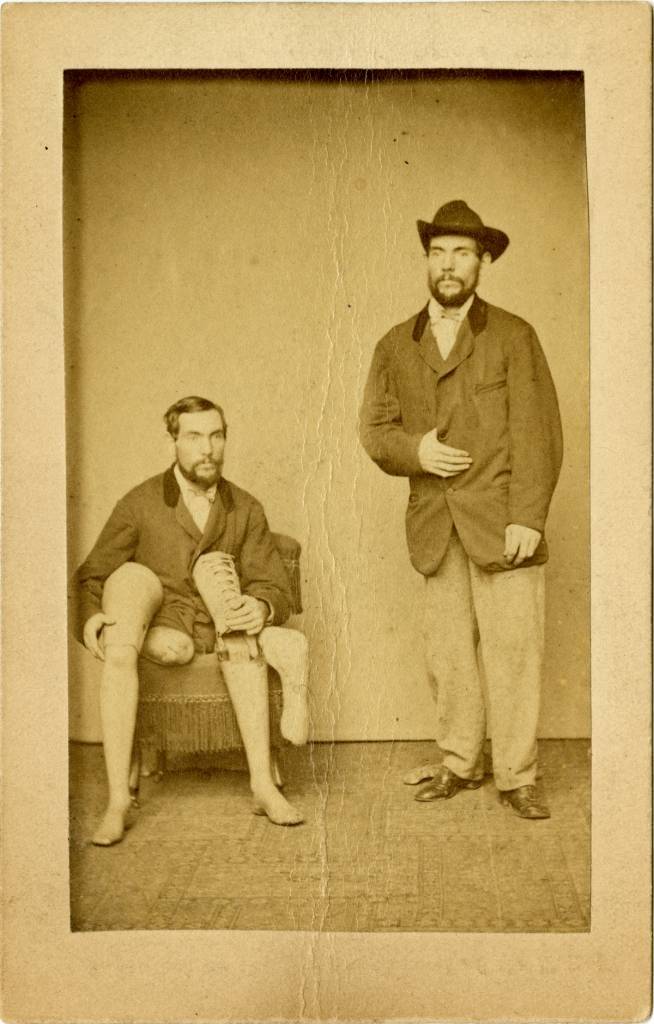
A. A. Marks promoted his artificial limbs with advertising cards like this one, turning a studio portrait into a direct, persuasive testimonial. Two men pose against a plain backdrop: one seated with both legs amputated, the other standing beside him. The seated figure holds a prosthetic leg while wearing another, making the message unmistakable even at a glance.
Details of dress and stance do the selling as much as the product itself. The standing man, hat on and jacket buttoned, looks composed and steady, while the seated man presents the crafted limb close to his body, as if inviting inspection of its shape and finish. The clean lines of the prosthesis—contrasted with bare skin and trouser hems—underline the era’s mix of medical necessity, craftsmanship, and public demonstration.
Placed in the broader context of Civil War–era injury and recovery, the card reads as both commerce and social history. It hints at the expanding market for rehabilitation devices and the dignity many amputees sought in returning to work and public life. For researchers and collectors of antique medical advertising, prosthetics history, and Civil War material culture, this image offers a stark, human record of how mobility was marketed and regained.