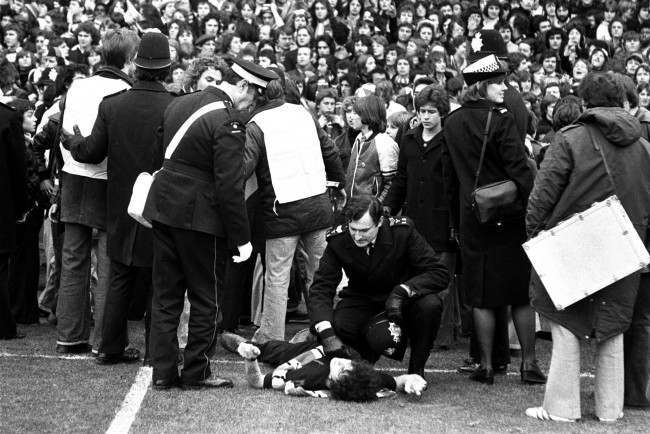
Chaos on the edge of the pitch turns suddenly intimate as a young fan lies on the turf while an officer kneels to administer first aid. Around them, uniformed police form a loose ring, their attention split between the injured child and the larger problem unfolding beyond the frame. Behind this foreground drama, packed terraces ripple with anxious faces, a reminder of how quickly a day of sport can tip into alarm.
Details in the scene speak to the 1970s matchday atmosphere: heavy coats, knit hats, peaked caps, and the unmistakable press of bodies close to the field lines. The presence of multiple officers and an on-the-spot medical response suggests crowd trouble serious enough to spill into the playing area, yet controlled enough for help to reach the ground. It’s a candid slice of stadium history, showing the human cost that can follow when excitement turns to disorder.
For readers interested in sports history, crowd control, and the lived experience of football culture in the 1970s, this photograph offers more than action—it offers consequence. The contrast between the stillness of the injured supporter and the restless mass of spectators creates a powerful narrative about safety, responsibility, and the fragile boundary between fans and the game. Even without a named venue, the image resonates as a stark reminder of why modern stadium policies and emergency preparedness evolved as they did.