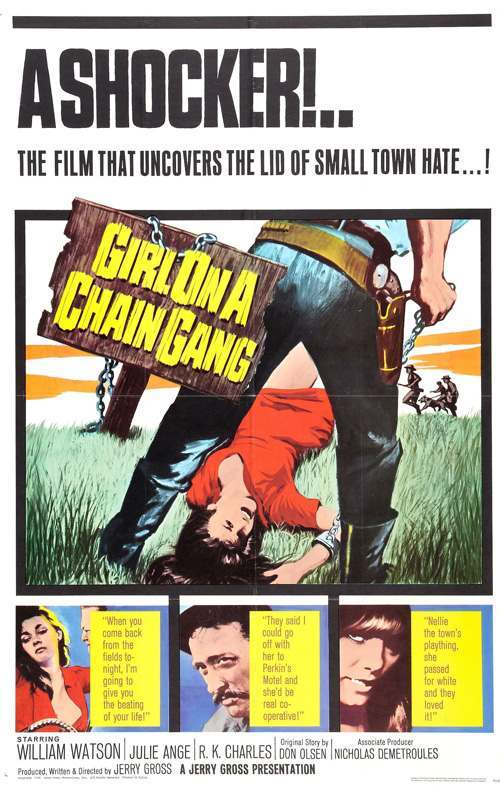
Bold, tabloid-style lettering screams “A SHOCKER!” across the top, setting a lurid tone that pulls you straight into the world of exploitation-era poster art. The composition is built to stop passersby in their tracks: thick outlines, high-contrast colors, and a headline-like promise of scandal that’s as much about selling a sensation as it is about telling a story. Even the tagline about “small town hate” leans into the era’s appetite for moral panic and controversy, a marketing language that still echoes through modern teaser campaigns.
At the center, the pose does the heavy lifting—an unmistakable A-frame stance that turns the standing figure into a human frame, literally bracketing the vulnerable body beneath. That triangular geometry funnels the eye downward, amplifying dominance, danger, and spectacle in a single, instantly readable silhouette. It’s the kind of poster logic that modern fashion editorials and movie one-sheets still borrow: a strong, angular stance that creates negative space, directs attention, and communicates power dynamics before you read a word.
Down below, smaller portrait panels and breathless copy widen the promise of drama, offering a cast of faces as if they were sensational “evidence” in a case you’re being dared to open. The wooden sign reading “GIRL ON A CHAIN GANG” doubles as both prop and headline, merging illustration with typographic design in a way that feels strikingly contemporary. For anyone tracing the A-frame’s influence, this piece is a vivid reminder that iconic poses aren’t just fashion—they’re visual shortcuts for meaning, refined in poster art and repurposed across decades of advertising, cinema, and pop culture imagery.