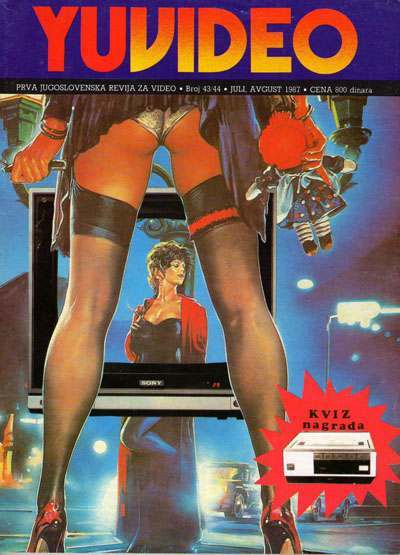
Bold typography and electric color announce this as a magazine cover—“YU VIDEO,” billed in small print as a Yugoslav video review—framing a provocative stance that immediately reads as the classic A‑frame. The figure’s legs form a strong triangular gateway, high heels planted wide on a wet, neon-lit street, while a television set and a distant woman in red sit perfectly in the negative space. It’s a clever piece of cover art design: the human body becomes architecture, turning a simple pose into a compositional device that pulls the eye inward.
In the center, the TV screen acts like a stage within a stage, echoing the same showy attitude with a mirrored, media-within-media effect. The styling—stockings, garters, and saturated nightlife glow—leans into the late‑20th‑century fascination with home video culture, where desire, technology, and spectacle were packaged for consumption. Even without relying on names or a precise place, the cover’s language is unmistakable: a pop-culture world where the pose sells the story as much as the subject does.
Fashion editorials, art posters, and movie one-sheets have returned to this A‑frame framing trick for decades because it does two jobs at once: it signals confidence and it creates a natural vignette around whatever—or whoever—needs attention. Here, the stance becomes a literal frame for the television image, turning the body into a bold border that can’t be ignored. For readers interested in how iconic poses shape visual culture, this piece offers a vivid example of how a single silhouette can choreograph gaze, power, and narrative across media.