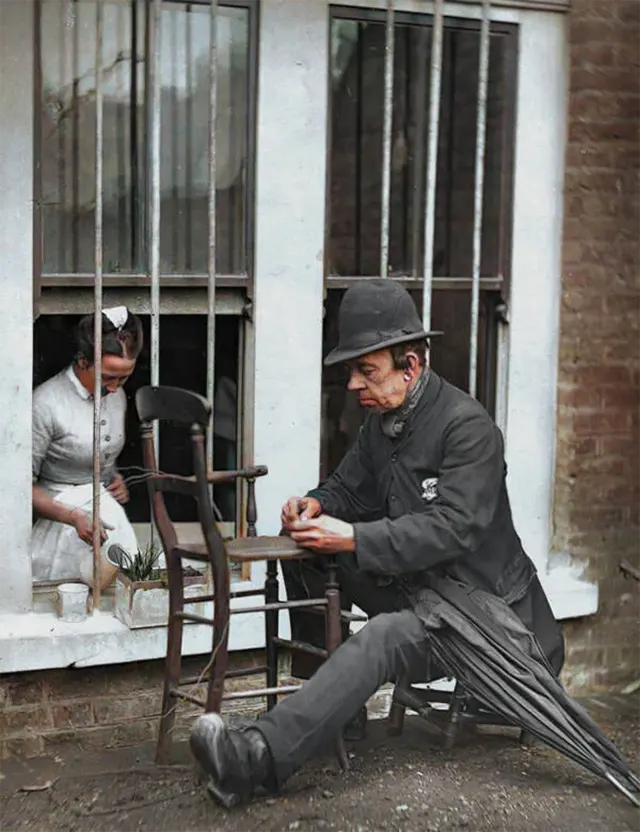
Outside a barred window, Caney sits low to the ground with an umbrella folded at his side, intent on the small, careful work of chair mending. The colorization brings out the soot-dark coat, the worn brim of his hat, and the polished leather of his boot, details that make the scene feel close rather than distant. A simple wooden chair stands between him and the window, turning the street into a makeshift workshop.
Behind the iron bars, a woman in a plain dress leans forward, hands busy with thread or cord, her attention fixed on the repair. The window frame and brick wall suggest an everyday neighborhood setting, and the barred panes add a quiet sense of separation between indoor domestic life and outdoor labor. Together they form a small tableau of late-19th-century craft and improvisation, when mending furniture was cheaper than replacing it.
The title’s note—that a beloved clown turned to chair repairing after a vein burst in his leg—casts the photograph as a story of survival as much as a period portrait. Entertainment work could be precarious, and injury often meant reinvention, especially for performers whose bodies were their livelihood. For readers searching for 1890s history, Victorian street trades, or the human side of old photographs, this image offers a vivid, grounded glimpse of resilience in ordinary surroundings.