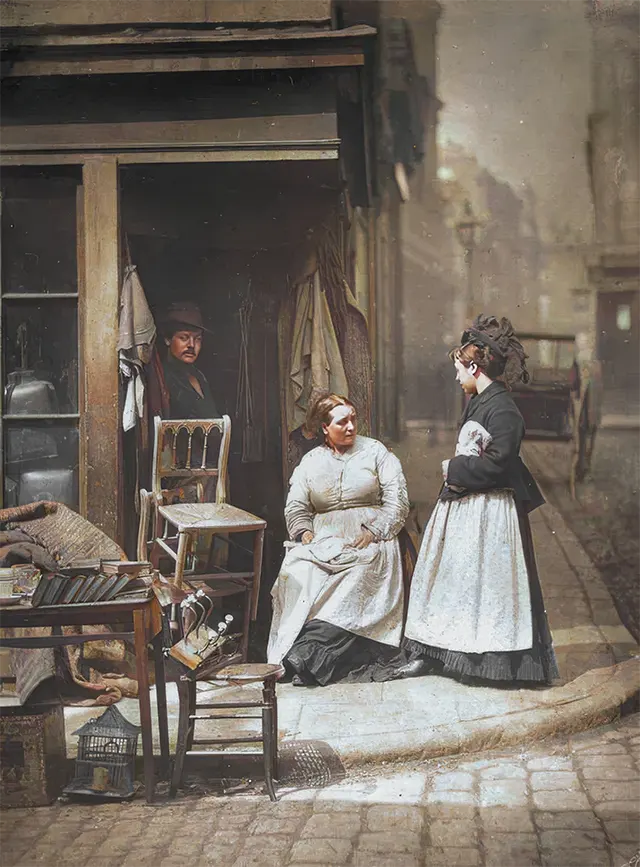
Just beyond the shopfront, two women pause in conversation on a worn doorstep, their aprons and dark jackets suggesting working lives shaped by long days and practical needs. The colorization brings out small, intimate details—soft fabric tones, the scuffed threshold, and the muted grime of the street—making the London of the 1890s feel less remote and more immediate. One woman sits, settled into the moment, while the other stands with arms folded, as if weighing news, prices, or the next errand.
Secondhand goods spill into the open air in a jumble that reads like a catalogue of everyday survival: chairs stacked and leaning, a cluttered table of miscellaneous items, and household bits and pieces offered up to passersby. The shop doorway is crowded with hanging garments and a watchful figure inside, hinting at the constant traffic of buying, selling, and bargaining that defined so many Victorian street corners. In scenes like this, commerce and community blur together, with the pavement serving as both marketplace and meeting place.
London street life in the late nineteenth century wasn’t only grand boulevards and famous landmarks; it was also these ordinary exchanges outside small businesses where people swapped stories as readily as they swapped used furniture. A secondhand shop could be a lifeline—cheap necessities, a chance to stretch a household budget, or a way to turn unwanted items into cash. Seen through the lens of careful colorization, the photograph invites a closer look at class, labor, and daily routine in the 1890s, all grounded in the simple act of talking at the door.