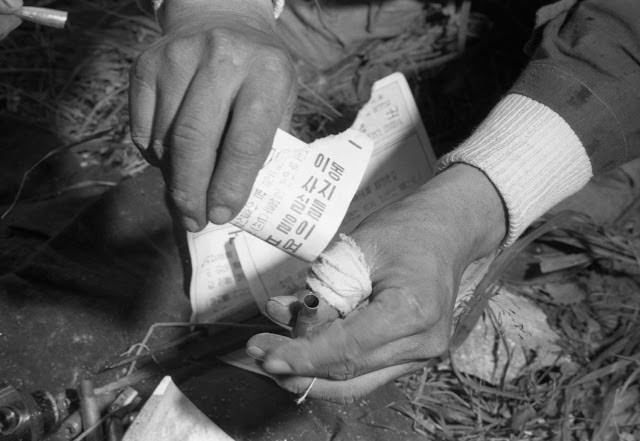
Across a rough patch of ground strewn with straw and debris, a pair of hands works with the careful economy of someone used to making do. A small paper packet printed with Korean script is tipped open, its contents poised above a short metal tube and other improvised pieces. The title “Bullets and gunpowder, 1952” feels less like metaphor here and more like a literal inventory of survival.
Bandaged wrists and practical clothing suggest injury, fatigue, or the harsh routines of a civil war environment, where supplies could be scarce and every round mattered. The close framing keeps faces and uniforms out of view, turning the scene into a study of process: measure, pour, assemble—quiet actions that sit beneath the louder history of gunfire. Details like the printed packaging and the handmade-looking components hint at the circulation of materials through occupied towns, field camps, and shifting front lines.
For readers searching for Civil Wars history, wartime improvisation, or 1952 conflict photography, this image offers a grounded look at the hidden labor behind combat. It invites questions about who handled these materials and under what pressures, without needing a battlefield in the background to convey urgency. In the end, the photograph lingers as a tactile record of ammunition-making and the fragile line between everyday work and deadly consequence.