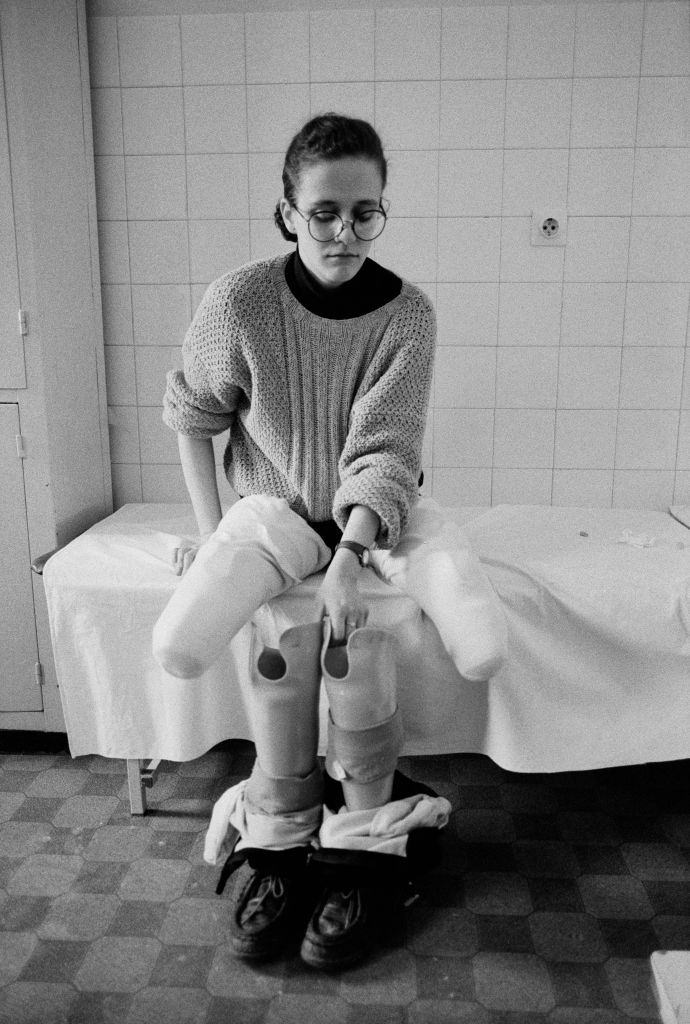
Against a stark wall of hospital tiles, a young girl sits on the edge of a bed, her gaze lowered behind round glasses as she steadies herself with one hand. Thick bandages wrap what remains of her legs, and two prosthetic limbs stand upright in front of her like waiting tools—present, heavy, and unfamiliar. The plain room, the creased sheet, and the hard floor beneath her shoes strip the scene of any distraction, leaving only the quiet reality of injury and endurance.
The title places this moment in 1994 during the Bosnian War, a conflict that turned ordinary civilian spaces into emergency wards and made childhood inseparable from survival. Here, the hospital is not a symbol of safety so much as a place of aftermath, where loss is measured in gauze, fittings, and the painstaking work of rehabilitation. Her posture suggests a pause between procedures—one of those long intervals when pain, fatigue, and determination coexist in silence.
For readers searching the human history of the Bosnian War, this photograph offers an intimate window into the civilian cost of civil wars: not battlefield drama, but recovery carried out day after day. The prosthetics at her feet speak to resilience and to the uneven resources of wartime medicine, where the future arrives in clinical increments rather than grand resolutions. It’s a record of a life interrupted and continued, and a reminder that the legacy of 1994 did not end with headlines—it followed survivors into rooms like this.