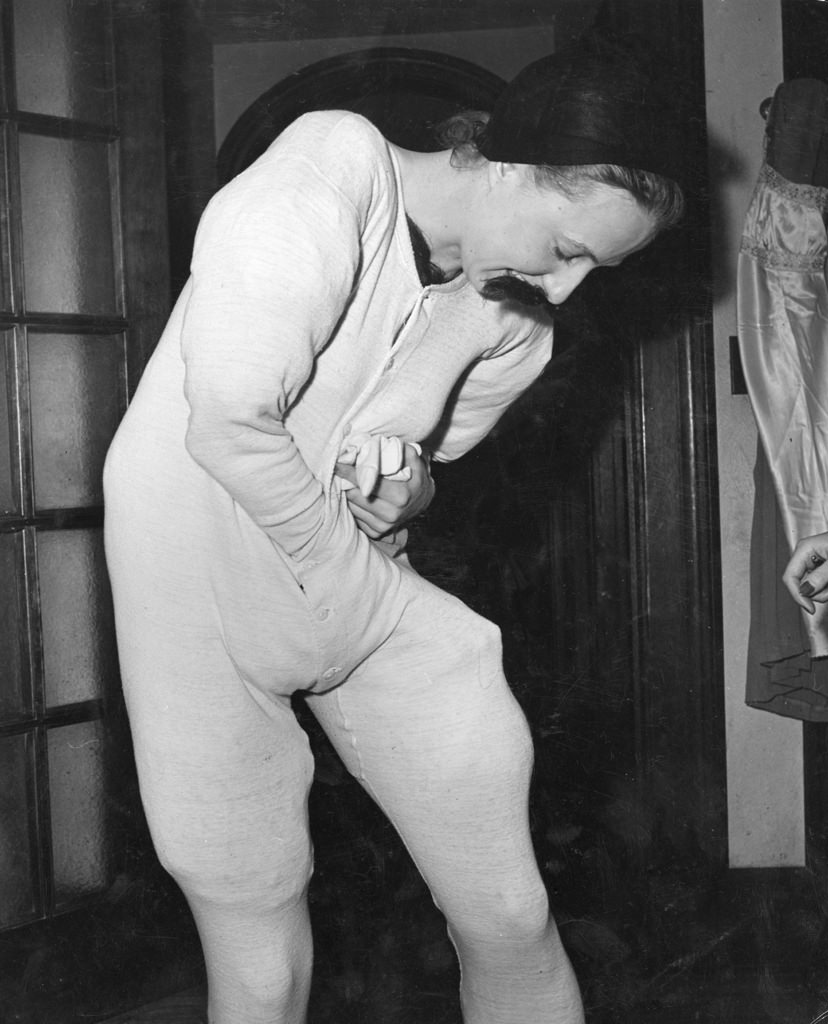
Laughter hangs in the air as one woman, dressed in a one-piece outfit and topped with a dark cap, hunches forward mid-gag—complete with a theatrical fake mustache that turns the moment into pure 1941 slapstick. The indoor setting feels like a club or meeting space, with a doorway and other attendees half-glimpsed at the edges, suggesting this was less a formal portrait than a candid bit of party business. It’s the kind of scene that reads instantly as a staged joke, yet it also preserves the easy, unguarded social energy of the era.
In Connecticut, a “smoker” was traditionally coded as a men’s gathering—cigars, speeches, and back-room camaraderie—so the title’s emphasis on GOP women makes the humor sharper. Here, the costume play and exaggerated pose underline how these Republican women were not just organizing and networking; they were also poking fun at the rituals that had long excluded them. The photograph captures that playful boundary-crossing, where politics, gender expectations, and community entertainment overlap in one lively frame.
Beyond the punchline, the image offers a small window into how women’s political groups built solidarity in the early 1940s: through meetings that mixed civic purpose with skits, costumes, and social club warmth. For readers searching for 1941 Connecticut history, women in politics, or vintage Republican Party culture, this photo lands as both a curiosity and a reminder that grassroots political life often ran on humor as much as ideology. It’s funny, yes—but it’s also a snapshot of belonging, confidence, and the everyday theatrics of American civic life.