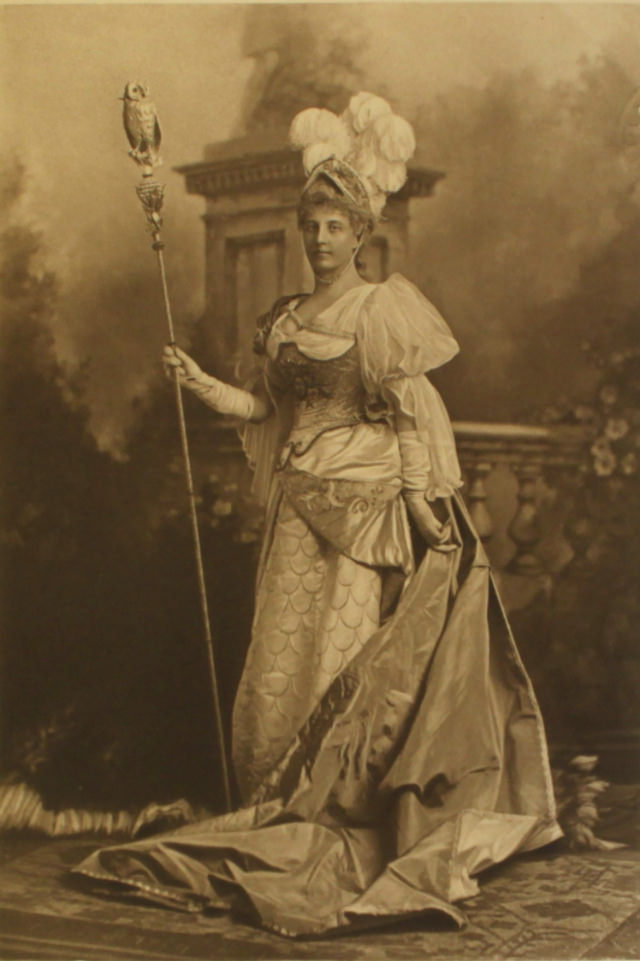
Poised in an ornate studio setting, the Countess of Gosford appears in an 18th-century interpretation of Minerva, the Roman goddess of wisdom, her gaze steady and self-possessed. A tall staff topped with an owl—Minerva’s emblem—anchors the portrait and immediately signals the classical role she is playing. The theatrical backdrop of balustrade and soft, painted scenery heightens the sense of staged grandeur typical of elite costume portraiture.
Her costume blends mythological symbolism with late-Victorian taste: a plumed helmet sits above carefully arranged hair, while voluminous sleeves and a fitted bodice shape a commanding silhouette. The skirt falls into a long, sweeping train, with layered textiles and patterned panels that suggest armor-like motifs without sacrificing elegance. Gloves and draped fabric add refinement, turning the goddess into a figure suited as much for a fashionable ballroom as for the ancient pantheon.
Linked to the famed Devonshire House Ball of 1897, this image reflects the era’s fascination with historical fantasy, classical learning, and display through dress. Such society events invited guests to embody allegory and antiquity, using exquisite tailoring and props to communicate character, status, and cultural confidence. For readers drawn to Victorian fashion history, costume balls, and the enduring iconography of Minerva, the photograph offers a rich glimpse of how mythology was reimagined in high society portraiture.