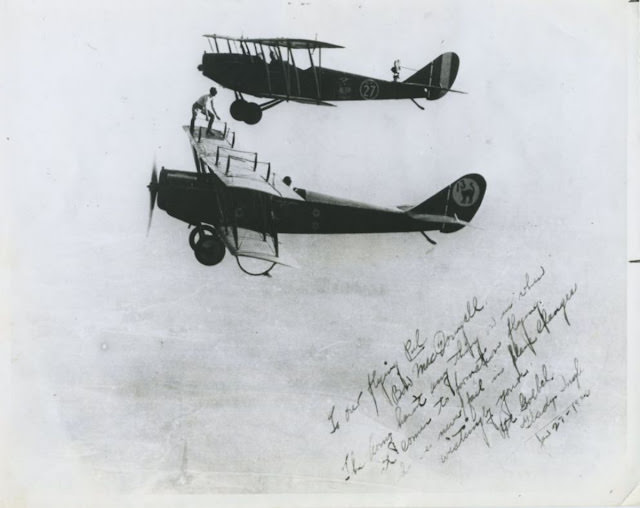
High above the ground, two biplanes hold a tight formation while a lone figure climbs along an improvised walkway between wings and struts, turning open sky into a stage. The title identifies the daredevil as Gladys Gertrude Ingle (1899–1981), poised to transfer from Bon MacDougall’s aircraft to Art Goebel’s—one of the most nerve-testing feats associated with the Flying Black Cats era of barnstorming entertainment. Details like the roundel-style markings, the exposed cockpits, and the stark emptiness beneath the planes underline how little separated performers from disaster.
What makes the scene linger is its mix of engineering and audacity: ladders and platforms appear bolted to the airframes, suggesting a carefully rehearsed routine built from practical modifications rather than cinematic trickery. The planes’ numbering and insignia hint at a coordinated troupe, and the spacing between the aircraft shows how precise the pilots had to be to keep the “bridge” steady enough for a midair crossing. For readers interested in early aviation history, women in flight, and the culture of 1920s airshows, this photograph distills the period’s appetite for spectacle into one suspended moment.
In the lower corner, a handwritten inscription turns the print into a personal artifact, reinforcing that it was meant to be kept, shared, and remembered long after the showgrounds emptied. Autographed photographs like this circulated as souvenirs and proof of having witnessed something extraordinary, helping performers build reputations across towns and seasons. As a WordPress feature image or gallery entry, it’s a striking reminder that aviation’s early decades weren’t only about records and routes—they were also about courage, choreography, and the thin line between stunt and history.