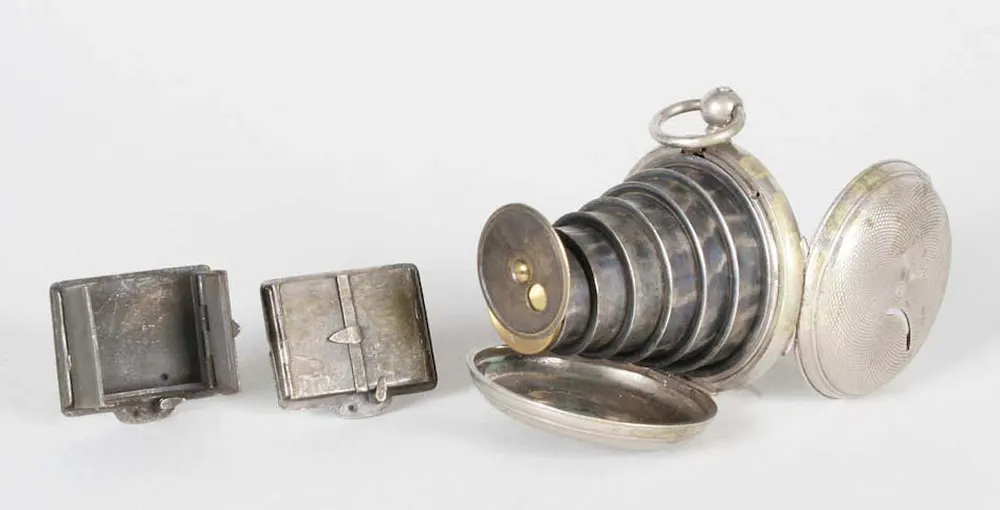
Victorian ingenuity often hid in plain sight, and the 1893 Lancaster Watch Camera is a perfect example of that clever disguise. In the photo, the device sits opened like an oversized pocket watch, its metal case splayed apart to reveal a compact, collapsible bellows lens that would have felt astonishingly modern to anyone used to bulky camera boxes. Even at rest, it carries the quiet confidence of precision engineering—part timepiece aesthetics, part photographic instrument.
Look closer and the “spy tool” reputation makes sense: small components lie beside the main body like detachable accessories, suggesting how the camera could be prepared quickly and then tucked away again. The circular lid and hinged case evoke everyday personal items of the era, while the bellows and lens assembly signal serious photographic intent. It’s a reminder that early portable photography wasn’t just about convenience; it also changed what could be recorded discreetly in streets, shops, and social gatherings.
For collectors and history enthusiasts searching for Victorian camera technology, antique spy cameras, or early miniature photographic devices, this image offers a striking window into the inventive culture of the late 19th century. The Lancaster Watch Camera represents the meeting point of industrial craftsmanship and a growing appetite for candid images, long before modern compact cameras made such secrecy commonplace. As an object, it tells a story of curiosity and capability—how a pocket-sized mechanism could expand the reach of photography into everyday life.