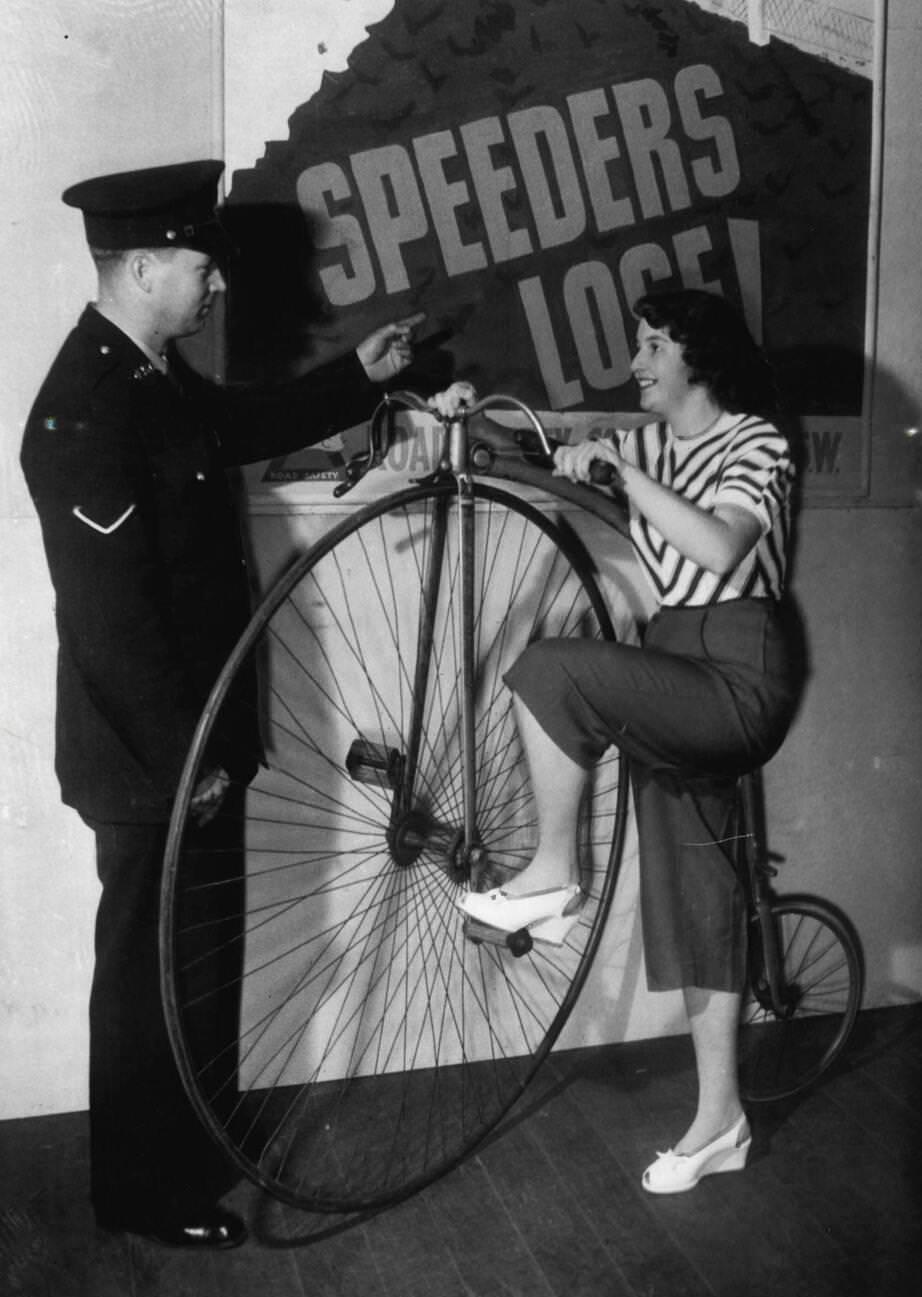
Against a bold “SPEEDERS LOSE!” safety poster, a uniformed officer gestures toward the towering front wheel of a penny-farthing while a smiling rider balances high above the floor. The contrast is irresistible: playful curiosity on one side, stern caution on the other, with the outsized “ordinary” bicycle—equal parts invention and dare—commanding the center of the frame. Even without a named place or date, the scene reads like a small public lesson in speed, risk, and the new freedoms that cycling once promised.
Look closely at the machine’s design and you can see why the penny-farthing era still fascinates historians of transport and technology. That immense front wheel wasn’t merely spectacle; it was engineering logic from a time before modern gearing, turning pedal strokes into distance through sheer diameter. The tiny trailing wheel, the high saddle, and the rider’s elevated posture remind us how much early cyclists literally climbed into the future, negotiating balance and braking with limited protection.
Moments like this help explain why vintage cycling photographs endure as more than charming oddities—they document the social life of an invention. Here, a public authority figure and an everyday rider share the same space, bridging regulation and recreation, novelty and normalization. For readers drawn to the history of bicycles, road safety, and the evolution from penny-farthings to modern bikes, this image offers a timeless snapshot of innovation meeting the street.