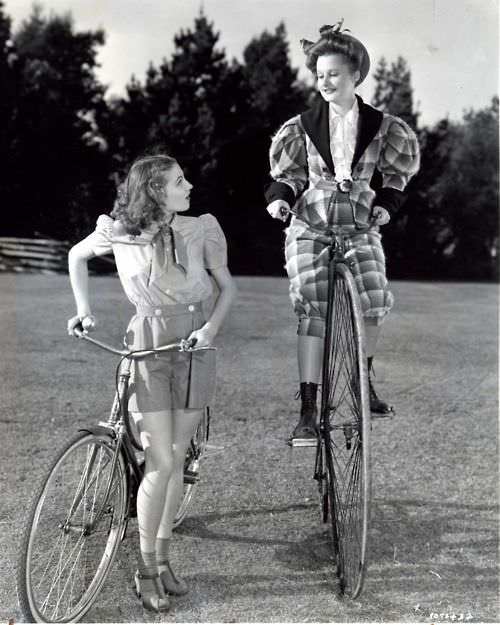
Sunlight on an open lawn sets the stage for an easygoing meeting between two riders, one perched high above the ground on a penny-farthing and the other steady beside a more familiar safety-style bicycle. Their relaxed body language and exchanged glance do as much as the machines themselves to suggest how cycling shifted from daring novelty to everyday leisure. The oversized front wheel, thin tire, and upright posture of the high-wheeler evoke a period when balance, bravery, and spectacle were part of the ride.
Clothing becomes a clue to the era’s social theater: patterned, puffed sleeves and tailored outfits turn a simple outing into a public promenade. The contrast in bicycle design reads like a quick lesson in invention—how experimenting with wheel size, geometry, and rider position shaped comfort and control. Even without a named place, the park-like backdrop and crisp focus create a timeless atmosphere that fits neatly into any discussion of vintage cycling photography and early bicycle innovation.
Details like the penny-farthing’s towering scale and the riders’ confident composure help explain why these images still draw modern enthusiasts, collectors, and historians. They speak to the romance of mechanical progress, when personal transportation was being reinvented in real time and photographed with pride. For readers searching for penny-farthing history, antique bicycles, or classic cycling culture, this scene offers a vivid reminder that the story of invention is also a story of people learning to live with new machines.