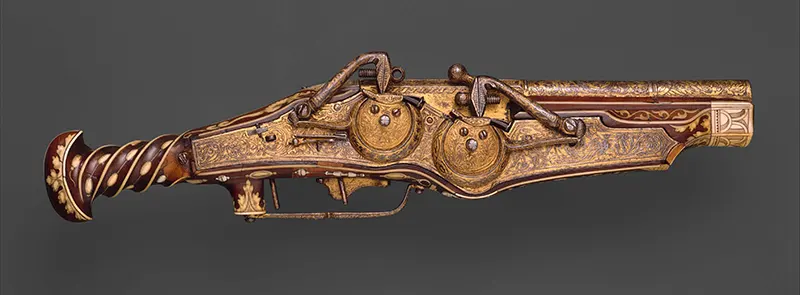
Opulent metalwork and a boldly carved grip announce that this double-barreled wheellock pistol was conceived as much for display as for use. The paired lock plates and twin wheels sit prominently along the side, while scrolling ornament and gilded surfaces turn a compact firearm into a piece of courtly art. Even at a glance, the balance between engineering and decoration feels deliberate, as if the maker expected it to be admired at close range.
Wheellock technology was a striking innovation of the early modern era, replacing the older match with a spring-driven wheel that struck sparks from pyrite to ignite the charge. In a weapon like this, the two barrels suggest an appetite for faster follow-up fire and mechanical bravura, even if such complexity demanded careful maintenance. The form tells a story of experimentation—fine tolerances, robust hardware, and craftsmanship aimed at reliability in an age when firearms were still proving themselves.
Linked in the title to Emperor Charles, the pistol also reflects how elite patronage shaped Renaissance arms and armor. Luxury firearms signaled status, modernity, and control over new military technologies, making them suitable as diplomatic gifts or princely possessions. For readers searching the history of wheellock pistols, Renaissance weaponry, or the evolution of early firearms, this image offers a vivid window into the inventive spirit—and the lavish tastes—of the 1540s.