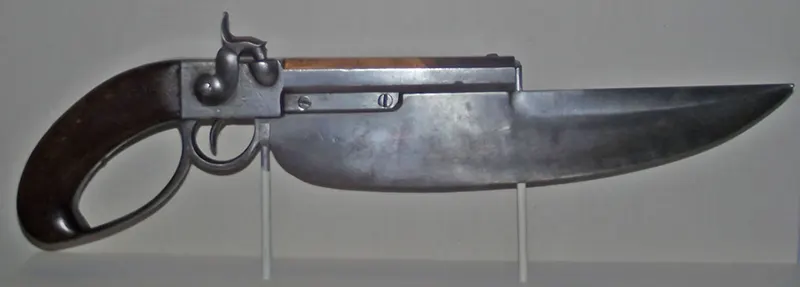
Few inventions reveal the 19th century’s appetite for compact, do‑it‑all weapons quite like the Elgin cutlass pistol (1837). The photograph highlights a hybrid design that merges a pistol frame with a substantial forward blade, turning a single object into both firearm and edged weapon. Even at a glance, the contrast between the smooth wooden grip and the heavy metalwork underscores how makers balanced handling, durability, and intimidation in one striking package.
Along the spine of the weapon, the pistol’s mechanism sits above the blade, with the trigger guard and hammer forming a tight cluster of moving parts near the hand. The long, broad blade dominates the profile, suggesting this was meant to be more than a novelty—something intended for close quarters where a shot might be followed by a slash. Small construction details—fasteners, fittings, and the clean junction where steel meets stock—invite a closer look at how early industrial craftsmanship met practical experimentation.
In the wider story of inventions, unusual combinations like the cutlass pistol speak to a period when designers were still testing what “multi‑purpose” could mean on land and at sea. For collectors, historians, and anyone browsing early firearms history, this image offers a clear view of the bold silhouettes and problem‑solving mentality that defined the era. Searchers interested in antique weapons, 1830s arms, and early firearm innovations will find the Elgin cutlass pistol a fascinating example of form following fear, function, and ingenuity.