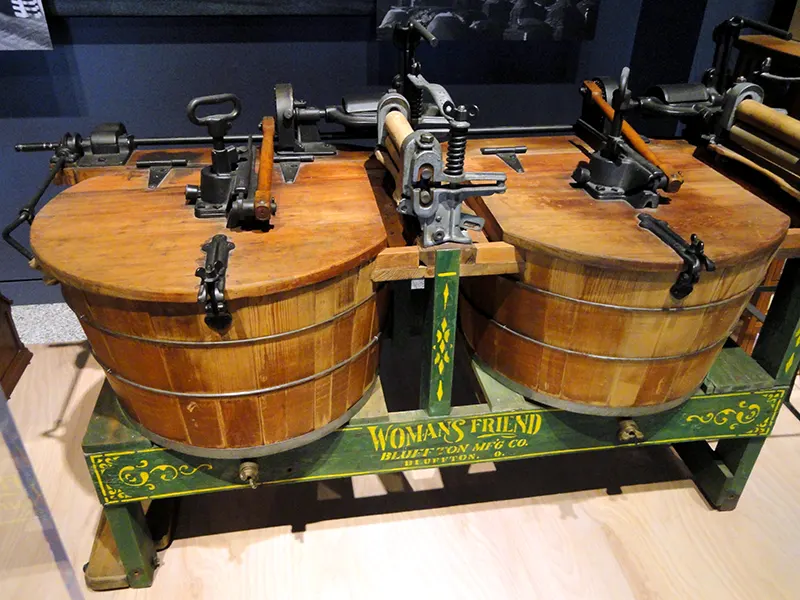
Polished wood tubs sit side by side on a sturdy painted frame, their warm grain and metal hoops hinting at a time when laundry was as much carpentry as chemistry. Across the front, ornate lettering proudly reads “Woman’s Friend,” a marketing promise that domestic labor could be eased by clever design. Even at a glance, the machine’s mix of wood, iron, and decorative flourishes places it firmly in the late-19th-century world of practical invention with showroom appeal.
Look closer at the hardware and the “friend” reveals itself as a system of levers, clamps, rollers, and a hand-cranked mechanism built to agitate, wring, and manage heavy wet fabric more efficiently. The paired tubs suggest an organized workflow—soak and wash, or wash and rinse—while the rigid framework keeps everything aligned under pressure. It’s an early washing machine that bridges the gap between washboard routines and the powered appliances that would later transform household work.
Domestic technology history often hides in plain sight, and this circa-1890 “Woman’s Friend” washing machine is a vivid reminder of how innovation entered the home through incremental improvements. Its bold branding speaks to the era’s gendered expectations, selling mechanical advantage as relief for women’s daily responsibilities rather than a shared task. For collectors, museum-goers, and readers searching for antique laundry equipment or 19th-century inventions, this photo captures the ingenuity—and the social story—built into everyday tools.