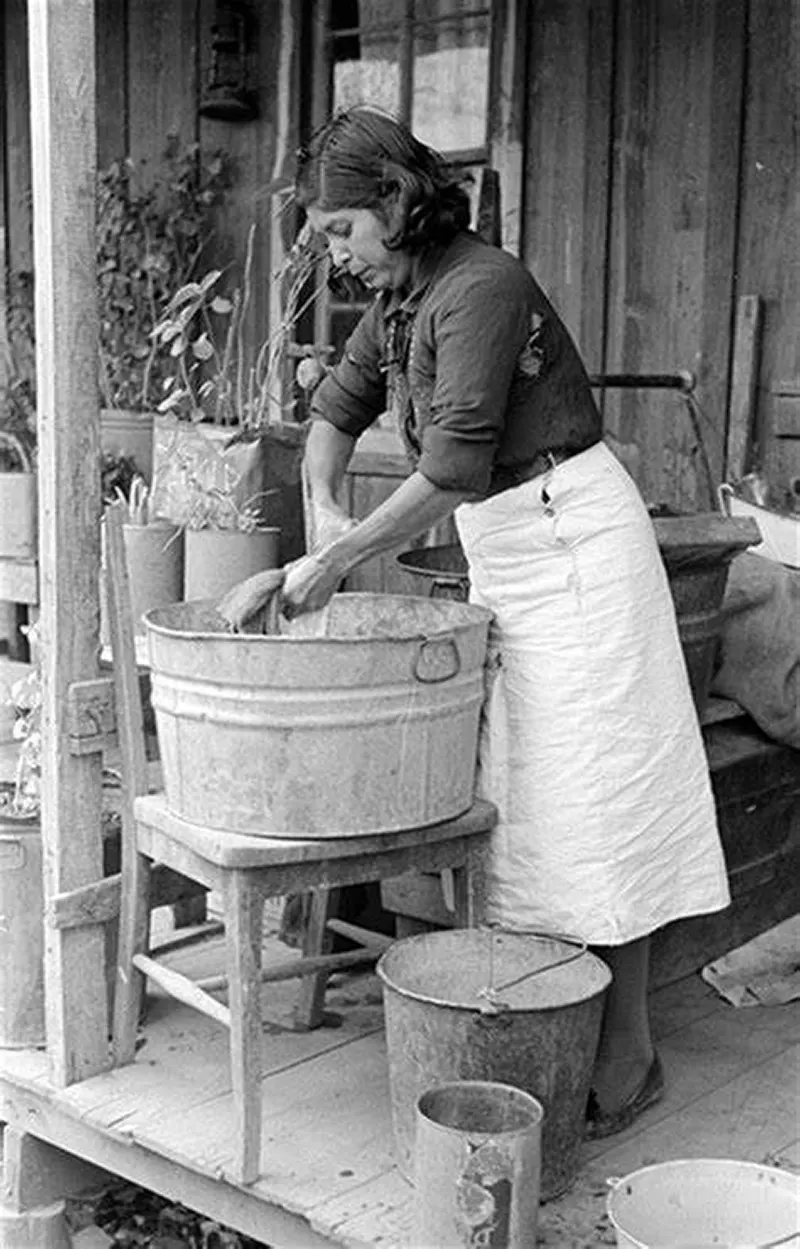
Hands plunged into a galvanized tub, the laundress works at a porch-side wash station where buckets, basins, and a heavy kettle-like vessel crowd the boards. The scene is rich with the everyday tools that defined laundry day before electric convenience—metal pails for hauling water, a sturdy stand to lift the wash to working height, and the constant choreography of soak, scrub, wring, and rinse. Small domestic details in the background, from potted plants to the house siding and window, anchor the labor in an ordinary home setting rather than a factory floor.
Laundry history is often told through patents and product ads, yet photographs like this make the stakes tangible: aching arms, damp sleeves, and time measured in loads rather than minutes. In the 1880s through the mid-20th century, early washing machine inventions promised relief by mechanizing agitation and wringing, gradually shifting the burden from muscle to gears, belts, and eventually motors. Even as new devices appeared, the tub-and-bucket workflow lingered for many households, underscoring how technology diffused unevenly and how “modern” living arrived in stages.
A Photographic Journey Through the Early Days of Washing Machines, 1880s–1950s Inventions uses images to trace that transition from handwashing rituals to early mechanical washers and the first familiar home appliances. Expect a look at changing designs, materials, and household setups—how a simple wash tub evolved into machines built to churn, drain, and spin with less effort. For readers exploring vintage laundry equipment, domestic life, and the history of household technology, this post offers a grounded, human-scale view of the innovations that transformed one of the most demanding chores in the home.