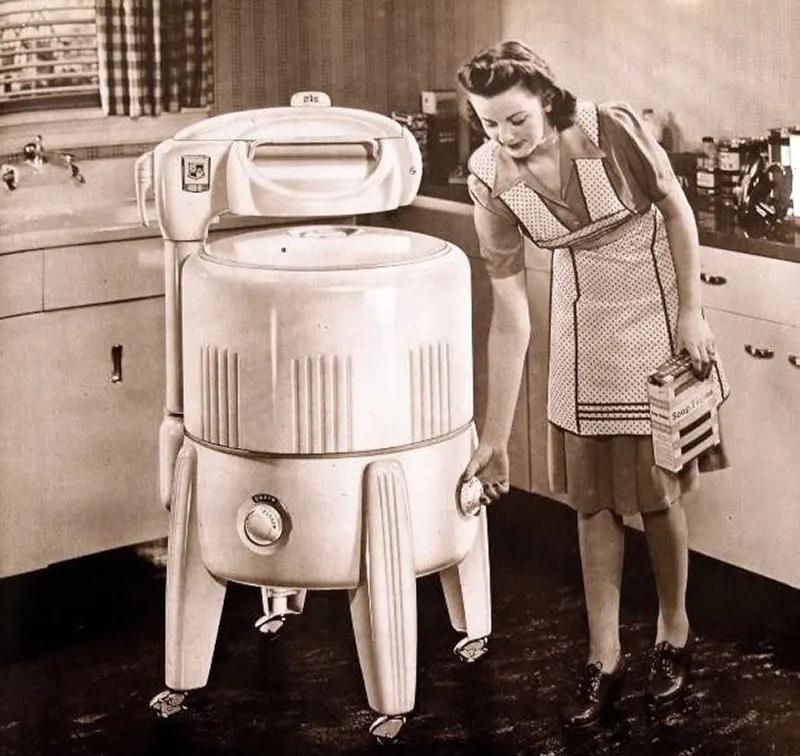
In a tidy mid-century kitchen, a streamlined electric washer stands like a piece of modern furniture—rounded lid, sturdy legs, and a simple control dial—while a neatly dressed homemaker reaches for the knob, laundry product in hand. The scene reads like a sales-floor demonstration brought into the home, emphasizing convenience, cleanliness, and the promise of push-button progress. Details in the background—curtains, countertops, and neatly arranged containers—frame the washing machine as part of a broader story of domestic technology and postwar consumer design.
Early washing machines evolved from hand-powered tubs and wringers into increasingly enclosed, motor-driven appliances, and images like this help track that shift from labor-intensive washday routines to mechanized ease. The bulky-yet-optimistic styling hints at an era when manufacturers proudly displayed engineering features rather than hiding them, and when “modern” meant smooth curves, solid construction, and easy-to-grip controls. Beyond the appliance itself, the photograph offers a window into how advertising and home economics literature reshaped expectations of housework during the first half of the 20th century.
“A Photographic Journey Through the Early Days of Washing Machines, 1880s–1950s Inventions” uses visuals to chart the march of laundry innovation—from practical contraptions to iconic household machines. Readers interested in vintage appliances, home history, and industrial design will find plenty to study: form following function, evolving materials, and the marketing language of efficiency. Taken together, these snapshots of invention show how a once grueling chore became a centerpiece of everyday modern living.